Midjourney Free Plan Review 2026: Is the Free Tier Actually Worth It?
📅 Updated August 3, 2026
⏱️ 9 min read
Try Midjourney →
Free trial available (~25 generations)
Here’s the scenario: you’ve seen stunning AI-generated images all over social media, someone mentions “Midjourney,” and you want to try it before spending a dime. Completely reasonable. But if you search “Midjourney free plan,” you’ll find wildly conflicting answers — some articles from 2023 still talking about a 25-image trial that worked differently back then, others claiming there’s no free option at all. The truth in 2026 is more nuanced than either extreme.
I spent two weeks stress-testing Midjourney’s free access, the Basic plan, and the Standard plan, running hundreds of prompts across different use cases — social media graphics, product mockups, editorial illustration, and concept art. This review focuses specifically on what you actually get for free, whether it’s usable, and at what point you genuinely need to upgrade. If you want a straight answer about whether the free tier is “enough,” I’ve got one for you by the end.
What Is Midjourney?
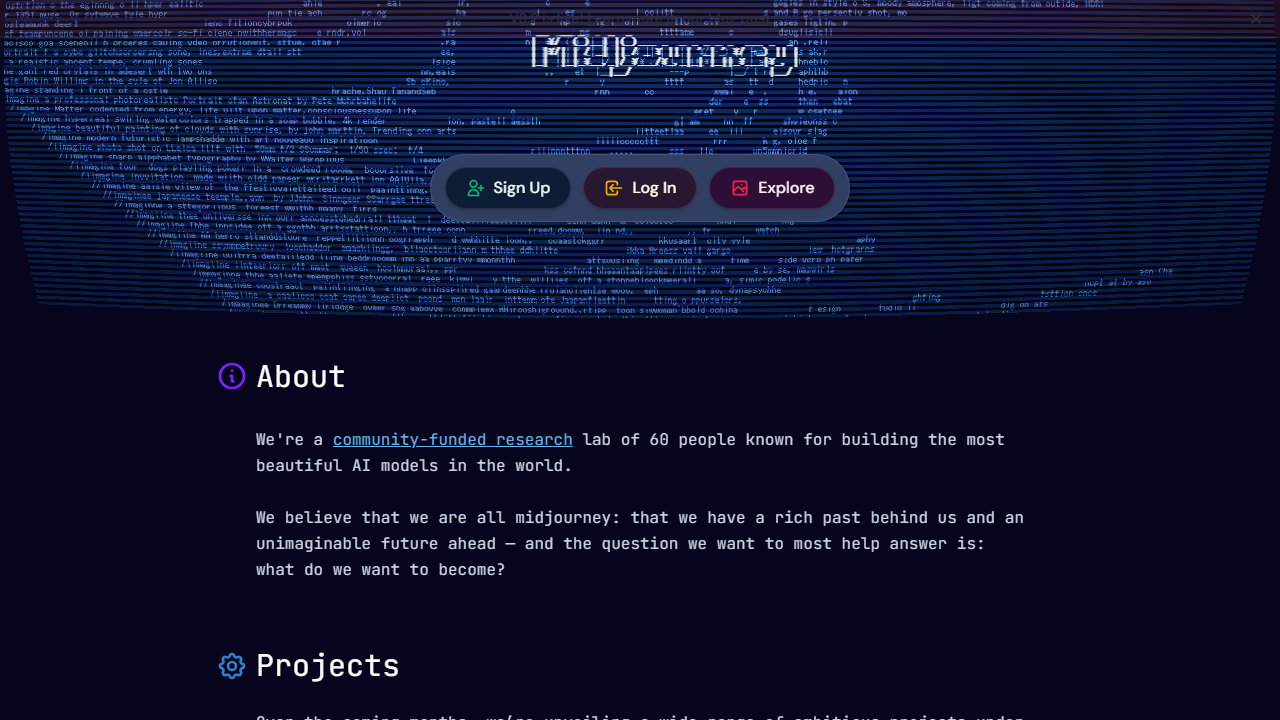
Midjourney is an AI image generation platform developed by the San Francisco-based independent research lab of the same name, founded in 2022 by David Holz (formerly of Leap Motion). Unlike OpenAI’s DALL-E or Google’s Imagen, Midjourney has remained an independent company and has consistently prioritized image quality and aesthetic output above all else. That bet has paid off — as of mid-2026, Midjourney is used by over 20 million registered users and remains the industry benchmark for photorealistic and artistic AI image generation.
The platform originally operated exclusively through Discord, which was a significant barrier for non-technical users. In 2024, Midjourney launched a full web interface at midjourney.com, and by 2026 it’s the primary way most people interact with the tool. The Discord workflow still exists and still has its fans, but the web UI is faster, cleaner, and frankly the better experience for anyone starting out today.
What sets Midjourney apart from the competition is the sheer quality and coherence of its output. Where other tools can produce technically accurate images that still feel slightly “off,” Midjourney’s outputs consistently have strong composition, accurate lighting, and a visual intelligence that is hard to quantify but immediately apparent when you compare outputs side by side.
Key Features of Midjourney (Free Plan Focus)
The free trial gives you access to a meaningful subset of Midjourney’s capabilities. Here’s what you actually get — and where the walls are.
~25 Free Image Generations (GPU Minutes)
Midjourney’s free access is measured in GPU minutes, not a flat image count, but in practice you’ll get roughly 25 standard image generations before your trial expires. Each generation produces a grid of four images. That means you’re looking at around 100 individual images total — which sounds like a lot until you realize how quickly you burn through them when iterating on prompts. Heavy users will exhaust this in 45 minutes. Careful, methodical users might stretch it to a couple of hours.
Access to the Latest Model (V7 in 2026)
Even on the free trial, you get access to Midjourney’s current flagship model, V7, which launched in early 2026 with significantly improved hand rendering, text-in-image accuracy, and photorealism. This is genuinely generous — you’re not being pushed onto a downgraded model just because you haven’t paid yet.
Full Prompt Language Support
The free tier supports the complete Midjourney prompt syntax: aspect ratio parameters (–ar), style parameters (–style), chaos values (–chaos), negative prompting with –no, and seed-locking for consistent outputs. You’re not getting a simplified prompt box — you get the real engine.
Public Gallery Only (No Privacy)
This is a real limitation: everything you generate on the free trial is visible in the public Midjourney community gallery. If you’re testing with proprietary product ideas, brand concepts, or anything you don’t want competitors or the general public to see, the free plan is not appropriate for that use case. Stealth mode requires the Pro plan at $60/month.
Web Interface Access
Free users get full access to the midjourney.com web app, including the image editor, variation tools, upscaling (up to 2x on free, 4x on paid), and the community gallery for prompt inspiration. The interface is genuinely well-designed and doesn’t feel crippled on the free tier.
Pricing Plans
Midjourney’s pricing is straightforward but has a few gotchas worth knowing. All plans are billed monthly, with a 20% discount if you pay annually. There is no ongoing free tier — once your trial generations are exhausted, you must subscribe to continue.
| Plan | Price/mo | Best For | Key Limit |
|---|---|---|---|
| Free Trial | $0 | Curious newcomers | ~25 generations, all public |
| Basic | $10/mo | Hobbyists, light users | 200 generations/mo, no commercial use |
| Standard | $30/mo | Creators, freelancers, small teams | 15 hr fast GPU/mo + unlimited relaxed |
| Pro | $60/mo | Agencies, professional studios | 30 hr fast GPU/mo + stealth mode |
One important note on the Basic plan: Midjourney’s terms of service require a paid plan at the Pro tier ($60/month) or higher for commercial use if your company earns over $1 million in annual revenue. For most independent creators and small businesses, the Standard plan at $30/month includes commercial licensing rights. Always verify current terms on Midjourney’s website before using images in client work or paid campaigns.
Who Should Use Midjourney’s Free Plan?
Best Midjourney Alternatives in 2026
If Midjourney’s free plan isn’t cutting it for your needs, or you want a genuinely free ongoing option, here’s how the top competitors stack up. Each has real trade-offs worth understanding.
| Tool | Starting Price | Best For | Our Rating |
|---|---|---|---|
| Adobe Firefly | Free (25 credits/mo) | Commercial-safe images, Adobe users | 4.1/5 |
| DALL-E 3 (via ChatGPT) | $20/mo (ChatGPT Plus) | Prompt-accurate, text-in-image | 4.0/5 |
| Stable Diffusion (local) | Free (self-hosted) | Power users, unlimited generation | 3.7/5 |
| Canva AI Image Generator | Free (limited), $15/mo Pro | Non-designers, social media content | 3.5/5 |
If you specifically need a real ongoing free tier with commercial rights baked in, Adobe Firefly is the strongest answer in 2026. Its 25 monthly credits reset every month, its outputs are trained on licensed content (meaning commercial use is explicitly permitted), and the quality gap between Firefly and Midjourney has narrowed considerably since Firefly 3 launched. That said, Midjourney’s output still has an artistic coherence that Firefly doesn’t fully match.
Frequently Asked Questions
Final Verdict: Is Midjourney’s Free Plan Enough in 2026?
Let’s be direct: Midjourney’s “free plan” is really just a trial. There is no ongoing free tier in the traditional sense — you get roughly 25 generations, they run out, and the gates close. For the sole purpose of evaluating whether Midjourney is worth paying for, those 25 generations are absolutely sufficient. The image quality speaks for itself within your first three prompts. But as a workable free solution for anyone who needs to produce images regularly? No, it’s not enough, and it was never designed to be.
If you need a free AI image generator you can use indefinitely, Adobe Firefly (25 credits/month, commercial rights included) or Canva’s AI tools are more honest answers to that specific need. But if your question is really “should I pay for Midjourney?” — the answer for designers, content creators, marketers, and anyone who cares deeply about image quality is almost certainly yes. The Standard plan at $30/month is one of the better per-image values in the creative software market today, especially with unlimited relaxed-mode generation in the mix.
Where Midjourney loses a point in our rating is its refusal to offer even a