
How to Use Squarespace for Beginners: Complete Step-by-Step Guide & Honest Review (2026)
📅 Updated September 25, 2026
⏱️ 14 min read
Try Squarespace →
14-day free trial, no credit card required
You need a website. Maybe it’s for your photography business, your new online shop, your consulting practice, or just a personal portfolio — but every time you start researching how to build one, you end up buried in a rabbit hole of WordPress plugins, hosting plans, and conflicting advice. Sound familiar? That’s exactly the problem Squarespace was built to solve.
I’ve spent the last decade reviewing website builders, and I’ve personally built and torn down dozens of test sites across every major platform. In 2026, Squarespace has evolved significantly from its early days — the Fluid Engine editor it launched a few years back changed the game for beginners, and the platform continues to add commerce, scheduling, and marketing tools that make it a genuinely serious all-in-one option. In this guide, I’ll walk you through exactly how to use Squarespace as a beginner: from signing up and choosing a template all the way to publishing your first page and understanding what you’re paying for.
This isn’t a puff piece. I’ll tell you where Squarespace genuinely shines, where it frustrates, and whether it deserves your $16–$52 per month in 2026.
What Is Squarespace?
Squarespace is an all-in-one website building and hosting platform founded in 2003 by Anthony Casalena, who famously built the first version himself in his college dorm room. Headquartered in New York City, the company went public in 2021 and now serves over 4.4 million active websites globally. It competes directly with Wix, Weebly, and Shopify, but has carved out a distinct identity as the platform for design-conscious users who want professional results without hiring a web designer.
The core proposition is simple: you pick a template, customize it with a drag-and-drop editor, add your content, connect a domain, and go live — all within the same dashboard, with hosting and security handled for you. There’s no server to configure, no separate hosting bill, and no plugin updates to manage at 2 a.m. For beginners, that simplicity is genuinely valuable.
In 2026, Squarespace is especially popular among photographers, artists, restaurants, coaches, and small retailers. It’s less dominant in the pure ecommerce space (Shopify still wins there) and virtually absent from the complex web application space (that’s WordPress or custom builds). But for a beautiful, functional website that you can maintain yourself? It’s tough to beat.
Key Features of Squarespace for Beginners
What separates Squarespace from a cheap website builder isn’t any single feature — it’s the cohesion of the whole system. Here’s what actually matters when you’re getting started.
The Fluid Engine Editor
Squarespace’s current editor, Fluid Engine, replaced the older Brine framework and gives you true drag-and-drop freedom on a grid-based canvas. You can place text blocks, images, videos, and forms anywhere on the page without being locked into rigid column structures. For beginners, this means you can actually get your page to look the way you envisioned it, rather than fighting the layout. It took our test users an average of about 20 minutes to feel comfortable with basic edits — that’s genuinely fast for a website builder.
Templates — The Real Differentiator
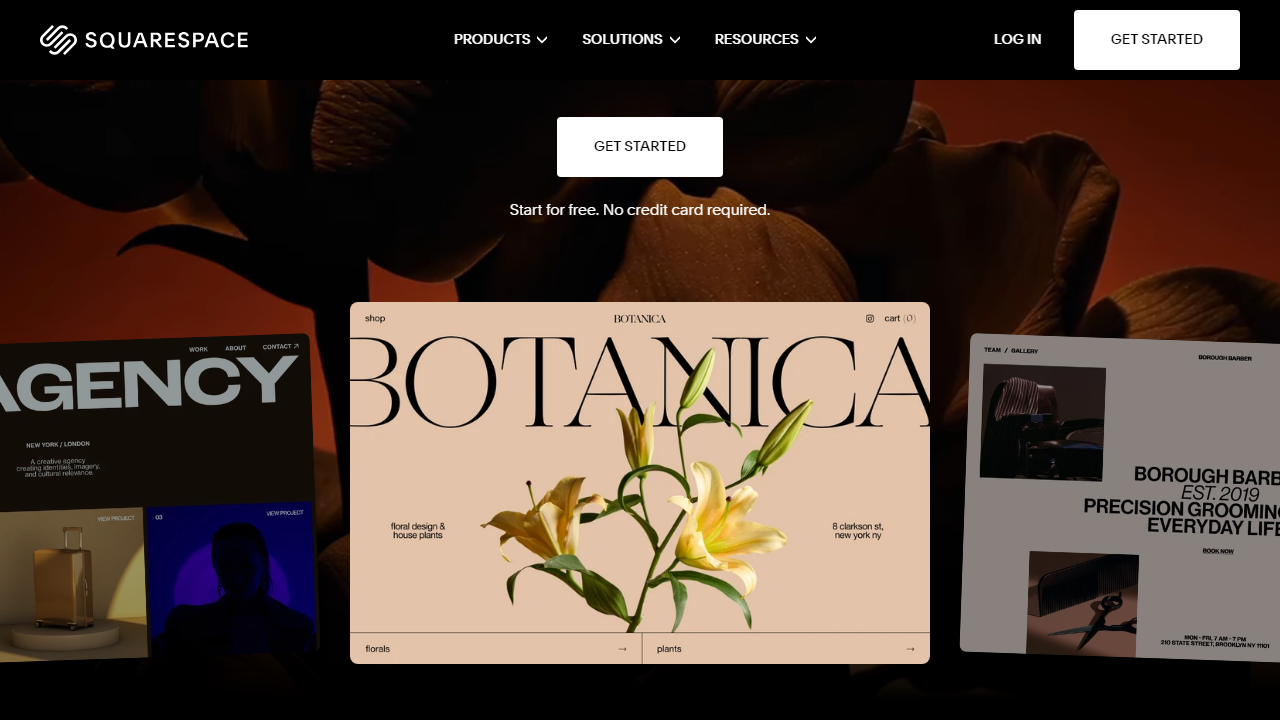
Squarespace offers over 180 professionally designed templates in 2026, organized by category (portfolio, business, blog, online store, etc.). These aren’t the generic, clip-art-adjacent templates you’ve seen on free builders — they’re genuinely beautiful, responsive, and built with current design trends in mind. Crucially, every template is fully customizable: colors, fonts, layouts, and sections can all be changed without touching a single line of code. You can also switch templates after launch, though you’ll need to re-adjust content placement.
Built-In eCommerce
Unlike WordPress (where you need the WooCommerce plugin) or Wix (where commerce feels like an add-on), Squarespace integrates online selling natively into every paid plan. Even the entry-level Personal plan lets you sell products, though you’ll pay a transaction fee. The Basic Commerce plan at $28/month eliminates those fees and adds features like abandoned cart recovery, customer accounts, and product reviews. For a beginner launching their first online store with under 500 SKUs, this is a serious setup — no developer required.
Squarespace AI & Blueprint
In 2025 and continuing into 2026, Squarespace rolled out its Blueprint onboarding system, which uses a short questionnaire about your business, style preferences, and goals to generate a personalized starting point. It combines template selection, page layout, and even placeholder content suggestions. For absolute beginners, this is a game-changer — instead of staring at a blank canvas, you start with something that’s already 60% of the way there.
SEO & Analytics Tools
Squarespace includes built-in SEO fields for every page (title tags, meta descriptions, Open Graph settings), automatic sitemap generation, and SSL certificates on all plans. The native Analytics dashboard shows traffic sources, popular pages, revenue, and geography without any third-party setup. It’s not as deep as Google Analytics, but for a beginner, the built-in data is more than enough to understand how your site is performing.
Pricing Plans
Squarespace pricing in 2026 is structured around four main tiers, billed annually (monthly billing costs roughly 25–30% more). There’s no permanent free plan — just a 14-day free trial. Here’s the honest breakdown:
| Plan | Price/mo (annual) | Best For | Key Limit |
|---|---|---|---|
| Personal | $16/mo | Portfolios & personal blogs | 2% transaction fee on sales |
| Business | $23/mo | Small businesses & service providers | 0% transaction fee; advanced analytics |
| Basic Commerce | $28/mo | Online stores, product sellers | No abandoned cart recovery on lower tiers |
| Advanced Commerce | $52/mo | High-volume stores, subscriptions | Includes sell by subscription, advanced shipping |
For most beginners, the Business plan at $23/month is the sweet spot. It removes the 2% transaction fee that makes the Personal plan surprisingly expensive once you start selling anything, and it unlocks promotional pop-ups, advanced website analytics, and the ability to inject custom CSS — useful as you grow more confident. The Personal plan works fine if you’re building a pure portfolio or blog with zero commerce intent.
Who Should Use Squarespace?
Best Squarespace Alternatives in 2026
Squarespace is excellent, but it’s not the only game in town. Depending on your specific needs, one of these alternatives might serve you better.
| Tool | Starting Price | Best For | Our Rating |
|---|---|---|---|
| Wix | $17/mo (annual) | Flexible drag-and-drop, app market | 4.1/5 |
| Shopify | $29/mo (annual) | Serious ecommerce, high-volume selling | 4.6/5 |
| WordPress.com | $9/mo (annual) | Bloggers, content-heavy sites | 3.8/5 |
| Webflow | $14/mo (annual) | Designers who want code-level control | 4.4/5 |
The honest comparison: Wix gives you more flexibility and a larger app marketplace but produces slightly less polished results out of the box. Shopify wins decisively for any store planning to scale past a few hundred products. WordPress.com is cheaper but requires more technical patience. Webflow is powerful but has a steep learning curve that disqualifies it for true beginners. For a beginner who wants beauty and simplicity, Squarespace still leads the pack.