How to Use Midjourney for Beginners: Complete Step-by-Step Guide (2026)
📅 Updated September 29, 2026
⏱️ 14 min read
Try Midjourney →
Plans start at $10/mo — no free tier
You’ve seen the stunning AI-generated images flooding LinkedIn, Instagram, and design portfolios — and you’ve wondered how to make them yourself. But every tutorial you’ve found either assumes you already know Discord commands by heart or glosses over the details that actually matter for beginners. You end up with muddy, generic outputs and no clear reason why.
We spent three weeks hands-on with Midjourney’s latest V7 model and the fully revamped web interface, generating over 400 images across categories from product mockups to editorial illustration to architectural rendering. This guide cuts straight to what works in 2026: account setup, your first prompts, the parameters that actually move the needle, and the workflow shortcuts that took us embarrassingly long to discover.
Whether you’re a marketing professional who needs on-brand visuals, a freelance designer exploring new tools, or simply a curious creative with zero technical background — this walkthrough will take you from zero to confidently generating publication-quality images in under an hour.
What Is Midjourney?
Midjourney is an independent AI research lab and image generation platform founded by David Holz in 2021. Unlike most AI tools built by tech giants, it has remained privately held and laser-focused on one thing: producing the highest-quality AI-generated images on the market. That singular focus shows. As of mid-2026, Midjourney has over 20 million active users and processes tens of millions of image generations per day across its infrastructure.
The platform originally operated exclusively through Discord — you typed commands into a chat server and received images back. That approach confused millions of potential users and became a real barrier to adoption. In late 2025, Midjourney launched a full standalone web interface at midjourney.com, which dramatically lowered the entry point for beginners. You can still use Discord if you prefer the community feel, but the web app is now the recommended starting point and where we’ll focus this guide.
What separates Midjourney from competitors like Adobe Firefly, DALL-E 3, and Stable Diffusion is consistently superior aesthetic output. Its V7 model, released in early 2026, produces images with better coherent lighting, more accurate human anatomy, and a broader stylistic range than any previous version. Independent blind taste tests across design communities routinely rank Midjourney outputs first.
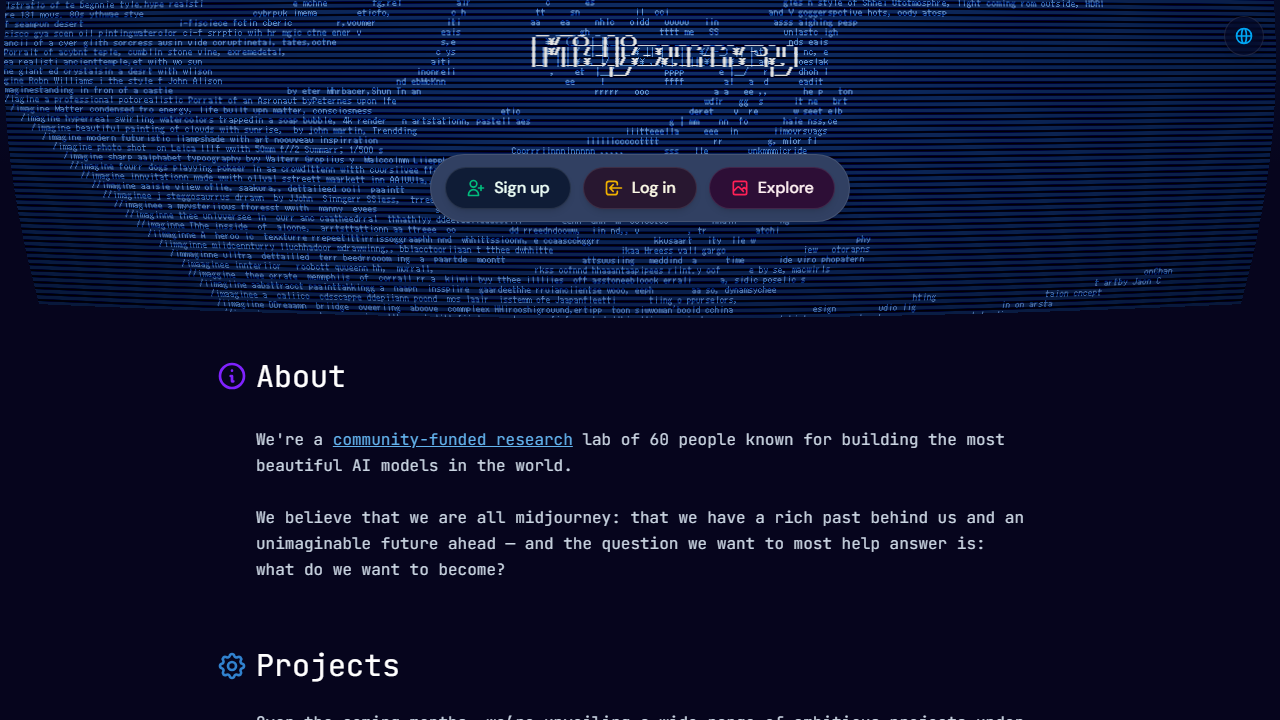
Key Features of Midjourney
Midjourney has evolved from a basic text-to-image tool into a full creative suite. Here are the features that matter most for beginners getting started in 2026.
The Web Interface (midjourney.com)
The standalone web app launched in 2025 gives you a clean dashboard to write prompts, browse your image history, explore the community feed, and manage your account — all without touching Discord. The interface includes a built-in prompt builder with suggested parameters, which is a genuine lifesaver when you’re starting out. You can also one-click remix any image in the public gallery, which is the fastest way to learn what great prompts look like.
V7 Model and Model Selection
Midjourney’s V7 model is the default as of 2026 and represents a massive leap in photorealism, coherent hands (yes, finally), and complex scene composition. You can switch between models — including the older V6 for its specific painterly aesthetic, and the Niji 6 model optimized specifically for anime and manga styles — directly from the settings panel. Each model has distinct strengths, and experienced users often keep multiple in rotation depending on the project.
Prompt Parameters
Parameters are modifiers you append to your prompt that control specific output characteristics. The most important ones for beginners are: –ar (aspect ratio, e.g., –ar 16:9 for widescreen), –stylize (controls how strongly Midjourney applies its aesthetic, from 0 to 1000), –chaos (increases variation between the four initial images, 0–100), and –no (negative prompting to exclude elements). These four parameters alone will dramatically improve your results within the first session.
Style Reference and Character Reference
Two of the most powerful features for professionals are Style Reference (–sref) and Character Reference (–cref). Style Reference lets you upload an image whose visual style you want Midjourney to replicate — your brand’s color palette, a specific illustrator’s line work, a photographer’s lighting signature. Character Reference does the same for consistent characters across multiple images, which is a game-changer for anyone building a narrative project, children’s book, or marketing campaign with recurring figures.
Upscaling and Variation Tools
Every prompt generates a 2×2 grid of four image options. From there, you can upscale any single image to full resolution (U1–U4 buttons), generate subtle variations of a specific image (V1–V4), or use the Vary (Region) tool to inpaint and edit specific areas of an image without regenerating the whole thing. The upscaler produces images up to 2048×2048 pixels on standard plans, with an additional 2x Creative Upscale available for even larger outputs.
Image Prompting (img2img)
You can upload your own image as a starting reference by pasting a direct image URL into your prompt before your text description. Midjourney will use your image’s composition, colors, and subject matter as a guide while blending in your text instructions. This is especially useful for product mockups, where you want to maintain specific shapes or color relationships while applying a new visual style.
Pricing Plans
Midjourney eliminated its free trial tier in late 2023 and has not brought it back. Every plan is billed monthly or annually (annual billing saves approximately 20%). Here’s the current pricing structure as of September 2026:
| Plan | Price/mo | Best For | Fast GPU Hours |
|---|---|---|---|
| Basic | $10 | Hobbyists & casual users | 3.3 hrs/month |
| Standard | $30 | Freelancers & active creators | 15 hrs/month + unlimited relaxed |
| Pro | $60 | Professional designers & agencies | 30 hrs/month + Stealth Mode |
| Mega | $120 | Studios & power users | 60 hrs/month + priority queue |
The key distinction between plans is “Fast GPU hours” versus “Relaxed mode.” Fast mode generates images in roughly 15–30 seconds. Relaxed mode (available on Standard and above) puts your job in a queue and can take 2–10 minutes, but is unlimited — meaning Standard plan users who don’t mind waiting can effectively generate unlimited images. For most beginners, the Standard plan at $30/month is the sweet spot.
Who Should Use Midjourney?
Best Midjourney Alternatives
Midjourney is our top pick, but it’s not the right fit for everyone. Here are the strongest alternatives we’ve tested in 2026, each with a genuine advantage in at least one area.
| Tool | Starting Price | Best For | Our Rating |
|---|---|---|---|
| Adobe Firefly | Included with CC ($55/mo) | Adobe Creative Cloud users | 4.1/5 |
| DALL-E 3 (ChatGPT) | $20/mo (ChatGPT Plus) | Text-heavy images & ease of use | 4.0/5 |
| Stable Diffusion (local) | Free (requires own hardware) | Privacy-conscious power users | 3.8/5 |
| Leonardo.ai | Free tier / $12/mo paid | Game asset creators & beginners | 4.0/5 |
Frequently Asked Questions
Final Verdict: Is Midjourney Worth It in 2026?
After three weeks of intensive testing and 400+ generations, our answer is an unambiguous yes — with one important caveat. Midjourney is worth every dollar if you’re willing to invest a few hours learning the