
ConvertKit vs Semrush: Which Is Better in 2026? (Honest Comparison)
📅 Updated November 10, 2026
⏱️ 10 min read
Try ConvertKit →
Free plan available · No credit card required
Here’s a scenario we hear constantly from our readers: you’ve got $150/month to invest in marketing software, and you’re trying to decide between two tools that keep showing up in your research — ConvertKit and Semrush. The problem? Nobody seems to explain that these tools aren’t really competing with each other. They’re built for different marketing channels entirely. Getting this wrong means months of wasted spend and no real results.
We spent several weeks actively testing both platforms — building email sequences in ConvertKit, running full site audits and keyword gap analyses in Semrush, and comparing their real-world impact on two separate test businesses. What we found is that the right answer depends almost entirely on your business model and your primary traffic strategy. This guide will make that decision crystal clear.
Whether you’re a newsletter creator trying to monetize your audience, a content marketer chasing organic rankings, or an agency trying to serve multiple clients, we’ll tell you exactly which tool belongs in your stack — and when you might actually need both.
What Are ConvertKit and Semrush?
ConvertKit (rebranded from “Kit” briefly in 2024 before reverting) is an email marketing and creator monetization platform founded by Nathan Barry in 2013. Headquartered in Boise, Idaho, it has grown to serve over 600,000 creators worldwide as of 2026, with a strong focus on bloggers, podcasters, course creators, and newsletter writers. Its core pitch is simple: help creators earn a living online through email. It’s not a generic email tool — it’s purpose-built for the creator economy, with built-in paid newsletter functionality, digital product sales, and subscriber management that prioritizes engagement over vanity metrics.
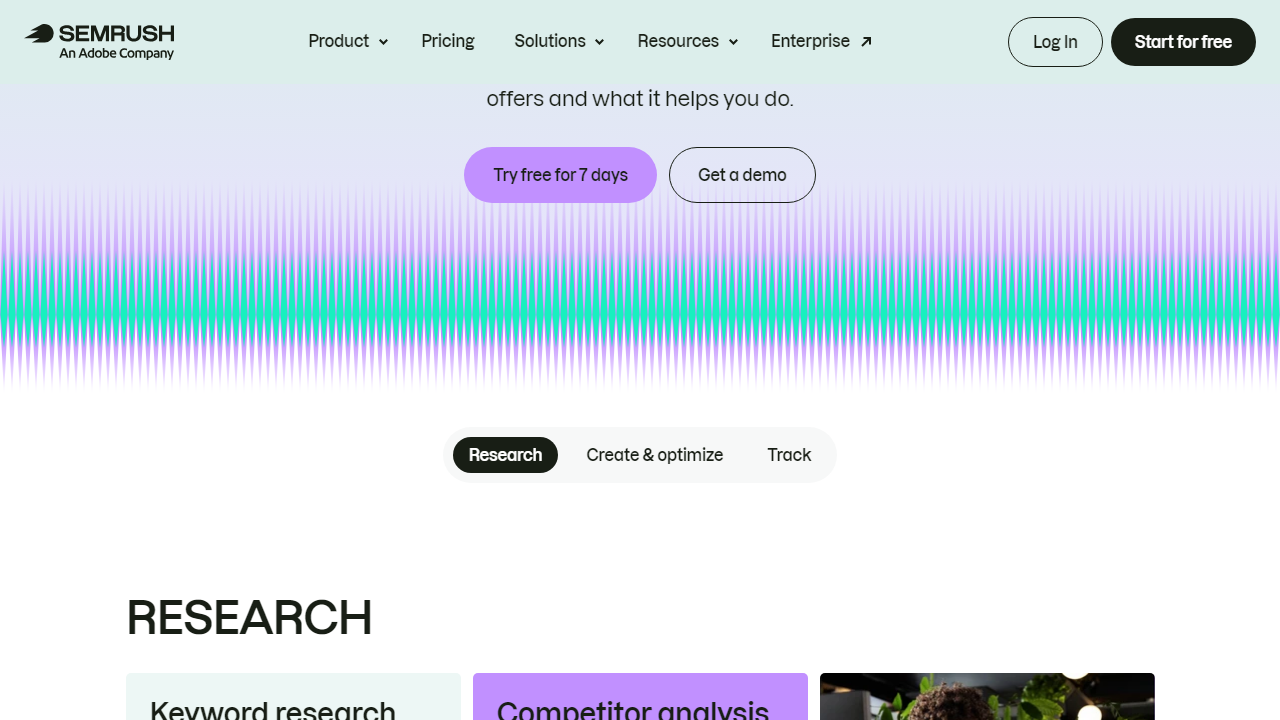
Semrush is a vastly different beast. Founded in 2008 by Oleg Shchegolev and Dmitry Melnikov in St. Petersburg (now operating out of Boston), it has become the dominant all-in-one SEO and digital marketing intelligence platform used by over 10 million marketing professionals globally. Where ConvertKit helps you talk to your existing audience, Semrush helps you find and win new audiences through search. It covers keyword research, backlink analysis, technical site audits, competitor intelligence, social media tracking, and paid advertising research under one roof.
Key Features Head-to-Head
Since these tools operate in different categories, we’re evaluating each on its core strengths rather than forcing an apples-to-apples comparison. Here’s what each platform actually does best in 2026.
ConvertKit: Email Automation and Sequences
ConvertKit’s visual automation builder is genuinely one of the cleanest in the email marketing space. You can build multi-step sequences triggered by tags, form submissions, purchases, or link clicks — all via a drag-and-drop canvas. The logic is intuitive enough that a non-technical creator can build a sophisticated 10-step nurture sequence in under an hour. Paid plans support unlimited automations with no cap on sequence length.
ConvertKit: Creator Monetization
This is where ConvertKit earns its edge over generic email tools. Built-in paid newsletter support lets you charge subscribers directly through Stripe integration, with ConvertKit taking a 3.5% fee on Creator plans and 0% on Creator Pro. You can also sell digital products (eBooks, templates, presets) directly from landing pages ConvertKit hosts for you. In 2026, the platform processed over $400 million in creator revenue annually — a stat that underscores how seriously they’ve built out this infrastructure.
Semrush: Keyword Research
Semrush’s Keyword Magic Tool is the most comprehensive keyword research interface available in 2026, pulling from a database of 26.4 billion keywords across 142 geographic databases. You can filter by keyword difficulty, search intent (informational, navigational, transactional, commercial), search volume trends, and CPC data simultaneously. The Keyword Gap tool is particularly powerful — paste in up to five competitor domains and instantly see which high-value keywords they’re ranking for that you’re missing entirely.
Semrush: Site Audit and Technical SEO
Semrush’s Site Audit crawls up to 100,000 pages per audit on the Pro plan and flags over 140 technical SEO issues categorized by severity. In our testing, it caught a critical crawl budget issue on a 400-page test site within 20 minutes that Google Search Console had not surfaced. The Core Web Vitals integration, added in a major 2025 update, now pulls live CrUX data alongside the crawl results so you get performance and technical issues in one unified report.
Semrush: Competitive Intelligence
The Traffic Analytics and Market Explorer tools give you a surprisingly detailed view of competitor strategies — estimated monthly visits, top traffic sources, audience demographics, and paid keyword spend. It’s not perfect (no third-party tool has exact traffic data), but across our tests the estimates were within 15–20% of actual Google Analytics figures for the sites we controlled. For agency pitches and content gap analysis, this level of detail is invaluable.
Pricing Plans Compared
Pricing is where these tools diverge most dramatically. ConvertKit scales with your subscriber count; Semrush scales with features and usage limits. Here’s a clean breakdown of both in 2026.
ConvertKit Pricing (2026):
| Plan | Price/mo | Best For | Key Limit |
|---|---|---|---|
| Free | $0 | Beginners, side projects | Up to 10,000 subscribers |
| Creator | $29/mo (1k subs) | Active newsletter creators | Automations, 3.5% commerce fee |
| Creator Pro | $59/mo (1k subs) | Full-time creators, teams | 0% commerce fee, subscriber scoring |
Semrush Pricing (2026):
| Plan | Price/mo | Best For | Key Limit |
|---|---|---|---|
| Free | $0 | Casual SEO learners | 10 requests/day, 1 project |
| Pro | $139.95/mo | Freelancers, in-house SEOs | 5 projects, 500 tracked keywords |
| Guru | $249.95/mo | Growing agencies, content teams | 15 projects, 1,500 tracked keywords |
| Business | $499.95/mo | Large agencies, enterprises | 40 projects, 5,000 tracked keywords |
Who Should Use Which Tool?
Top Alternatives to Both Tools
If neither ConvertKit nor Semrush is the right fit — or you want to compare before committing — here are the strongest alternatives in each category for 2026.
| Tool | Starting Price | Best For | Our Rating |
|---|---|---|---|
| Mailchimp | Free / $13/mo | Small businesses, e-commerce | 4.0/5 |
| Beehiiv | Free / $39/mo | Newsletter-first creators, media brands | 4.4/5 |
| Ahrefs | $129/mo | SEO professionals preferring backlink depth | 4.5/5 |
| Moz Pro | $99/mo | SEO beginners, local SEO focus | 3.8/5 |