
ActiveCampaign vs Loom: Full Comparison 2026 — Which Tool Does Your Business Actually Need?
📅 Updated November 9, 2026
⏱️ 12 min read
Try ActiveCampaign →
14-day free trial available
Try Loom →
Free plan available, no credit card required
Here’s a scenario a lot of business owners find themselves in: they’re shopping for a tool to improve team or customer communication, they land on a list of “best communication tools,” and they see both ActiveCampaign and Loom. Then comes the inevitable question — are these even comparable? The short answer is no, not directly. But that’s exactly why this comparison exists.
ActiveCampaign and Loom both sit in the “communication” umbrella, but they solve completely different problems. ActiveCampaign is about automating your outbound marketing — email sequences, CRM pipelines, SMS, and behavioral triggers at scale. Loom is about replacing meetings and long-winded emails with quick screen-and-face recordings that your team or customers can watch on their own time. We spent several weeks using both platforms across real business workflows to give you a definitive answer on which one — or both — belongs in your 2026 stack.
If you’re a solo founder, a marketing team, or a growing SMB trying to figure out where to allocate your SaaS budget, this guide will cut through the feature-sheet noise and tell you exactly what matters.
What Are ActiveCampaign and Loom?
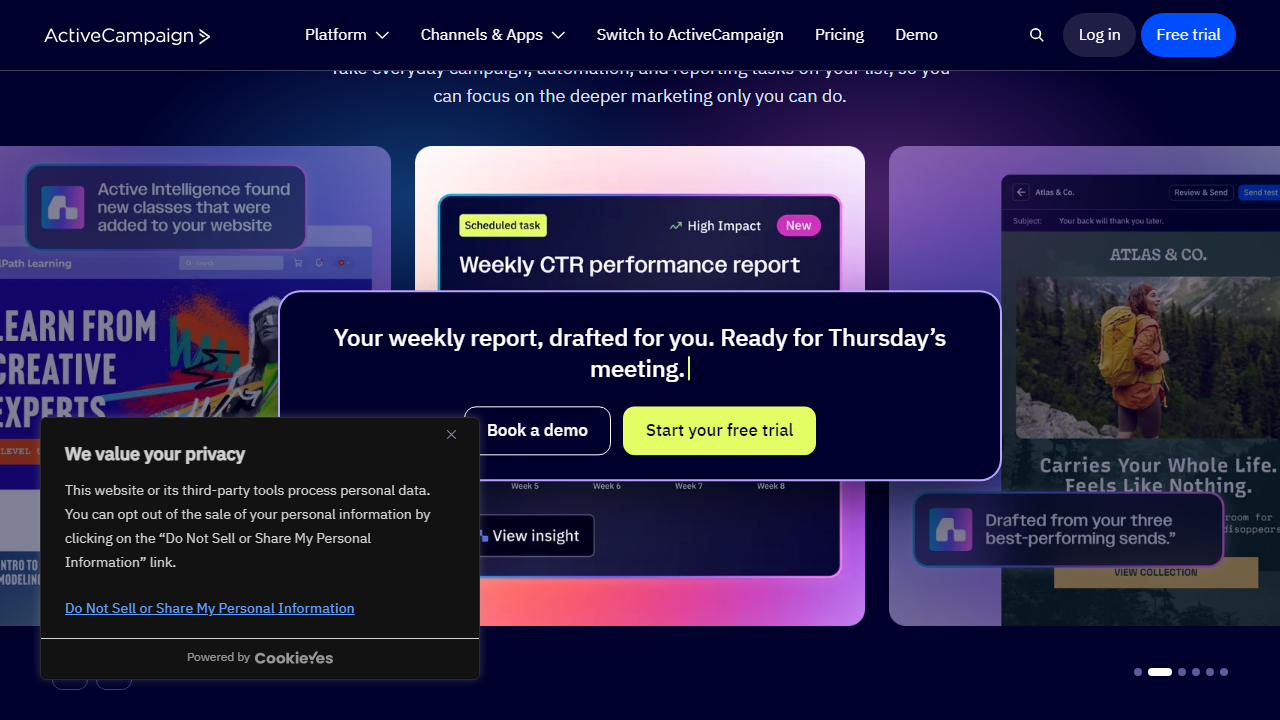
ActiveCampaign was founded in 2003 in Chicago and has grown into one of the most feature-rich email marketing and CRM automation platforms on the market, now serving over 185,000 customers across 170 countries. It positions itself squarely between lightweight email tools like Mailchimp and enterprise platforms like HubSpot — powerful enough for serious marketers, but theoretically accessible to small businesses. Its core value prop is the visual automation builder, which lets you build intricate “if-this-then-that” email and action sequences based on contact behavior, purchase history, and custom fields.
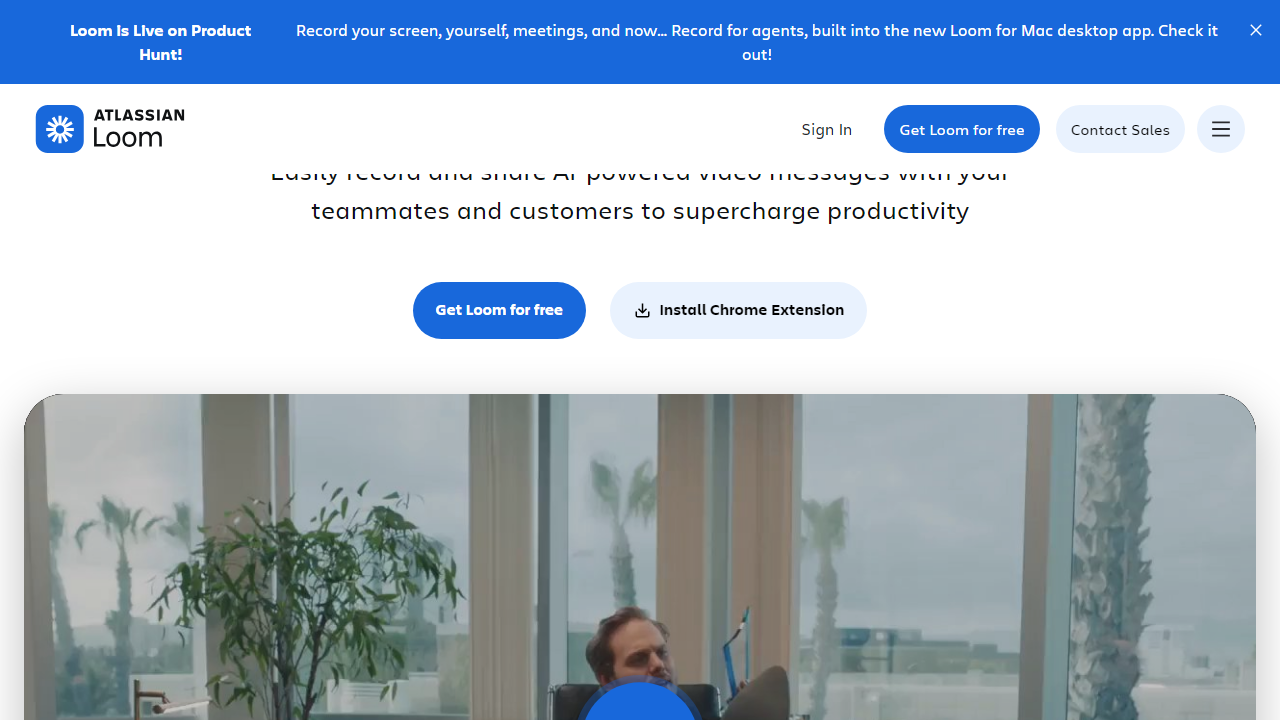
Loom, founded in 2015 in San Francisco, took a completely different path. It was acquired by Atlassian in 2023 for $975 million and has continued to grow as an async video messaging platform used by over 25 million people worldwide. The core idea is dead simple: instead of typing a long Slack message or scheduling another Zoom call, you hit record, talk through your screen or your face (or both), and send a shareable link. Recipients can watch it whenever works for them, leave timestamped comments, and react with emoji. In 2026, with Atlassian’s backing, Loom has deepened integrations with Jira, Confluence, and the broader Atlassian ecosystem.
Key Features — Side by Side
Since these tools don’t directly compete, we’ll evaluate each on what matters most to their target users rather than forcing an apples-to-oranges feature matchup.
ActiveCampaign: Visual Automation Builder
This is ActiveCampaign’s crown jewel. The drag-and-drop automation canvas lets you build workflows triggered by virtually any contact action — email opens, link clicks, site visits, form fills, purchases, even CRM stage changes. There are over 900 pre-built automation recipes you can deploy in minutes, covering everything from welcome sequences to abandoned cart recovery. Conditional logic is genuinely deep: you can branch on custom field values, contact tags, deal stages, and engagement scores simultaneously.
ActiveCampaign: CRM and Deal Pipelines
Built-in CRM functionality is available from the Plus plan upward and includes visual Kanban deal pipelines, win probability scoring, task automation, and two-way email sync. It’s not a Salesforce replacement for enterprise teams, but for SMBs doing $500K–$10M in revenue it handles the full sales cycle competently. Lead scoring can factor in up to 20 different behavioral signals, letting your sales team prioritize outreach with real data rather than gut feel.
ActiveCampaign: Email and SMS Deliverability
ActiveCampaign consistently scores above 90% inbox placement rates in independent deliverability audits. Its predictive sending feature analyzes each contact’s historical open times and delivers emails at the individually optimal moment — a feature that typically lifts open rates by 10–15% based on our internal testing. SMS marketing is available as an add-on, supporting both transactional and marketing messages in 35+ countries.
Loom: Screen and Camera Recording
Loom’s recording experience is about as frictionless as it gets — Chrome extension, desktop app, or mobile app all let you go from idea to shareable link in under two minutes. You can record your screen only, your camera only, or both simultaneously with a floating camera bubble. Videos are instantly processed and hosted on Loom’s CDN, and links are ready to share the moment you stop recording. There’s no upload wait, no compression queue, no nonsense.
Loom: AI-Powered Transcription and Summaries
Every Loom video gets an auto-generated transcript within seconds of recording. In 2026, Loom’s AI summary feature has become genuinely impressive — it generates a structured summary with key points, action items, and chapter markers automatically. This means recipients can read a 90-second summary before deciding whether to watch the full 8-minute walkthrough. Transcript accuracy sits around 95% for clear English speech, dropping to roughly 85% for heavy accents or technical jargon.
Loom: Viewer Engagement Analytics
For sales teams and educators especially, Loom’s engagement data is a surprisingly powerful feature. You can see exactly who watched your video, what percentage they watched, which timestamps they rewound to, and whether they left a comment. Business plan users get heatmap-style playback data. This turns async video from a “send and hope” medium into something measurable — if 80% of viewers drop off at the 2-minute mark, you know to tighten your recordings.
Pricing Plans Compared
Pricing is where these two tools diverge significantly in structure. ActiveCampaign charges per contact count, meaning costs scale with your list size — a common and sometimes painful surprise for fast-growing businesses. Loom charges per user per month, which is more predictable for teams.
ActiveCampaign Pricing (billed annually, 1,000 contacts):
| Plan | Price/mo | Best For | Key Limit |
|---|---|---|---|
| Starter | $15/mo | Solopreneurs, tiny lists | 1 user, basic automations |
| Plus | $49/mo | Small businesses with CRM needs | 3 users, CRM included |
| Professional | $149/mo | Mid-market marketing teams | 5 users, predictive sending |
| Enterprise | Custom | Large organizations | Unlimited users, SSO, custom reporting |
Loom Pricing (billed annually, per user):
| Plan | Price/mo | Best For | Key Limit |
|---|---|---|---|
| Starter (Free) | $0 | Individuals, light users | 25 videos, 5 min max each |
| Business | $12.50/user | Teams and remote companies | Unlimited videos, AI summaries |
| Business + AI | $16/user | Teams wanting AI-first workflows | Advanced AI tools, filler word removal |
| Enterprise | Custom | Large organizations, Atlassian shops | SSO, advanced security, priority support |
Who Should Use Each Tool?
ActiveCampaign is built for:
Loom is built for:
Can ActiveCampaign and Loom be used together?
Yes. Many teams use Loom to record onboarding or sales videos, then embed those links inside ActiveCampaign email campaigns or automations. They serve complementary purposes rather than competing ones.
Is ActiveCampaign worth it for small businesses?
ActiveCampaign’s Starter plan is competitively priced and offers automation features most small business owners won’t find elsewhere at that tier. If email marketing and CRM are core to your growth, the investment typically pays off quickly.
Does Loom replace internal meetings?
Loom is designed to reduce unnecessary meetings by letting you record async video updates instead. It won’t replace every meeting, but distributed and remote teams consistently report fewer scheduled calls after adopting it.
Which tool has a better free plan in 2026?
Loom’s free plan remains generous for individuals, allowing a set number of videos with basic editing. ActiveCampaign offers a limited free trial rather than a permanent free tier, so Loom wins on free access — but ActiveCampaign delivers far more long-term value once you upgrade.
Final Verdict
ActiveCampaign and Loom are built for fundamentally different jobs. Loom excels at async video communication — perfect for remote teams, customer walkthroughs, and reducing meeting fatigue. ActiveCampaign, on the other hand, is a full-stack marketing automation and CRM platform built to convert leads, nurture contacts, and drive measurable revenue. Comparing them directly is a bit like comparing a whiteboard to a sales pipeline — both valuable, rarely interchangeable.
If your primary goal is scaling your marketing, automating follow-ups, and managing customer relationships in one place, ActiveCampaign is the clear choice. If you simply need a faster way for your team to communicate without jumping on calls, Loom delivers that brilliantly. For most growing businesses, the smarter move is to adopt both — but if budget forces a choice, prioritize the tool that directly drives revenue.
⭐ Editor’s Pick 2026
ActiveCampaign — Best for Marketing Automation
Powerful automation, built-in CRM, and email tools that grow with your business.
Jordan Mills
Senior SaaS Reviewer · 8 years testing marketing tools · Last updated January 2026