
ConvertKit vs Semrush: Full Comparison 2026 — Which Tool Does Your Business Actually Need?
📅 Updated September 20, 2026
⏱️ 11 min read
Try ConvertKit →
Free plan available — no credit card required
Every week, someone in a marketing Slack channel asks some version of the same question: “Should I be using ConvertKit or Semrush?” It’s an understandable question — both are premium SaaS tools, both are staples of the digital marketing world, and both cost real money. But here’s the thing: it’s almost always the wrong question. ConvertKit is an email marketing and creator monetization platform. Semrush is an SEO and competitive intelligence suite. They don’t compete. They complement.
That said, we understand why the confusion exists. Bootstrapped founders and solo operators have limited budgets and genuinely need to prioritize. If you’re choosing where to spend your first $100–$200/month on marketing software, the choice between “build my audience” (ConvertKit) and “drive traffic to find that audience” (Semrush) is a real strategic decision. We spent three weeks using both tools across multiple live projects — a newsletter-based SaaS business, a content marketing blog, and a small e-commerce brand — to give you the most honest, practical breakdown possible.
This comparison covers features, real-world pricing, ideal use cases, and our blunt recommendation on which tool to prioritize first — and when you’ll need both.
What Are ConvertKit and Semrush?
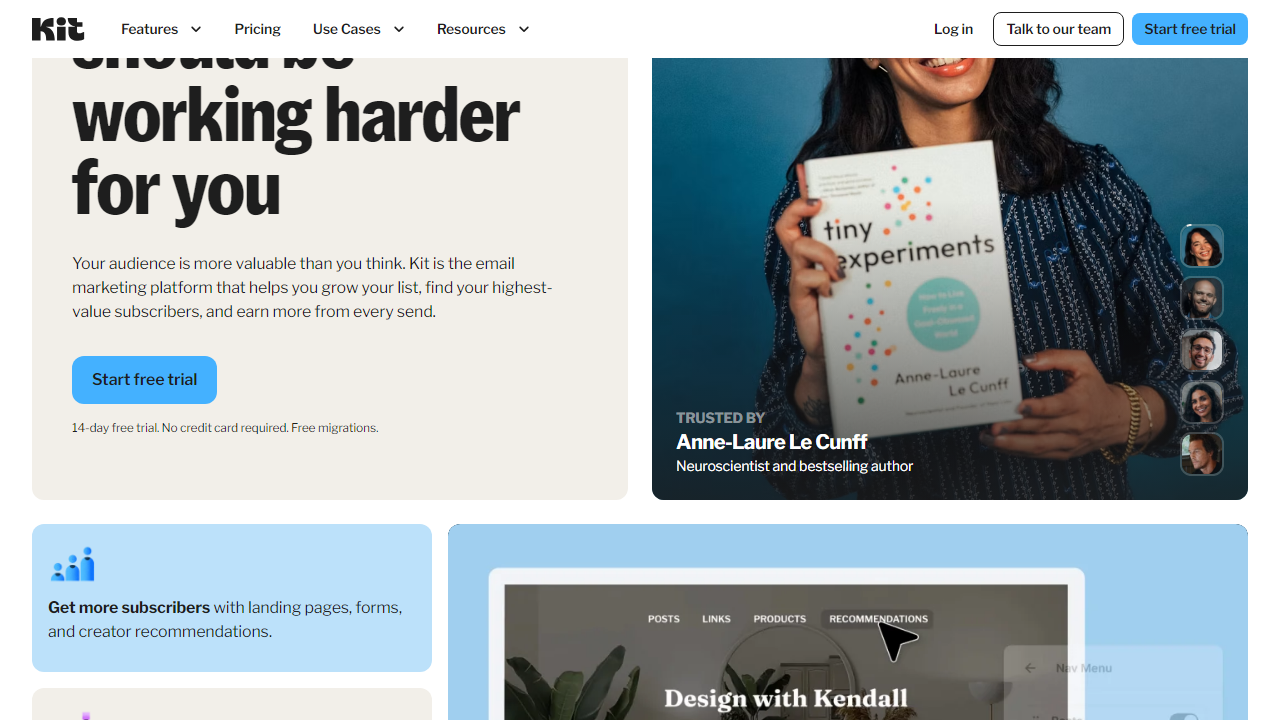
ConvertKit (rebranded as Kit in late 2024 but still widely known as ConvertKit) was founded in 2013 by Nathan Barry in Boise, Idaho. It was built from the ground up for creators — bloggers, podcasters, YouTubers, and online course sellers — who needed email marketing that was simple enough to manage solo but powerful enough to drive real revenue. As of 2026, ConvertKit powers over 600,000 creators and has processed more than $400 million in creator revenue through its commerce features. It’s not trying to be Salesforce. It’s trying to be the best email tool for people who make things and sell them online.
Semrush, founded in 2008 in Boston by Oleg Shchegolev and Dmitry Melnikov, is a different beast entirely. It started as an SEO keyword research tool and has since expanded into a 55+ tool platform covering SEO, PPC research, content marketing, social media management, and competitive analysis. Semrush went public on the NYSE in 2021 and as of 2026 serves over 10 million marketing professionals worldwide. Its database of 25 billion keywords and 43 trillion backlinks makes it one of the most comprehensive SEO data repositories on the planet.
Key Features Side-by-Side
Because these tools operate in different categories, we’ll walk through the standout features of each — then show you how they can work together in a single marketing workflow.
ConvertKit: Visual Automation Builder
ConvertKit’s automation builder is genuinely one of the best in the email marketing space. You can build complex subscriber journeys — triggered by form fills, purchases, link clicks, or custom tags — using a clean drag-and-drop canvas. Unlike Mailchimp’s clunkier interface, ConvertKit’s sequences stay readable even when you have 15+ automation steps. For a newsletter operator, this is the feature that separates the pros from the amateurs.
ConvertKit: Creator Commerce
ConvertKit lets you sell digital products, paid newsletters, and tip jars directly through the platform with zero transaction fees on paid plans. You can set up a product page, connect Stripe, and be selling within 20 minutes. The paid newsletter feature (via Stripe integration) now supports tiered pricing, free trials, and annual billing — it’s a legitimate Substack competitor that keeps 100% of your revenue after Stripe’s standard 2.9% + $0.30 cut.
ConvertKit: Subscriber Tagging and Segmentation
Instead of forcing you into rigid list silos, ConvertKit uses a tag-based system where every subscriber exists once in your account and can carry multiple tags (e.g., “podcast-listener,” “paid-customer,” “webinar-attendee”). This means your 50,000-subscriber list doesn’t become 50,000 duplicates when someone joins multiple funnels — a real deliverability advantage.
Semrush: Keyword Research and Gap Analysis
Semrush’s Keyword Magic Tool gives you access to 25+ billion keyword suggestions with metrics including search volume, keyword difficulty (0–100), CPC, and SERP feature opportunities. The Keyword Gap tool is particularly powerful — paste in your domain and up to four competitors and Semrush instantly shows you which high-value keywords they rank for that you don’t. In our tests, this surfaced 340+ actionable keyword opportunities for a mid-size SaaS blog in under 10 minutes.
Semrush: Site Audit and Technical SEO
Semrush’s Site Audit tool crawls up to 100,000 pages per month on the Pro plan and checks against 130+ technical SEO issues — from crawl errors and broken internal links to Core Web Vitals failures and hreflang misconfigurations. It prioritizes issues by severity and gives step-by-step fix instructions. We ran it on a 400-page content site and it caught 14 critical issues that Google Search Console had completely missed.
Semrush: Competitor Intelligence
Traffic Analytics and Organic Research let you reverse-engineer any competitor’s content strategy. You can see their top-performing pages by estimated organic traffic, their backlink growth over time, and even what paid keywords they’re bidding on in Google Ads. For a business entering a competitive niche, this replaces weeks of manual research.
Pricing Plans Compared
Here’s where things get interesting. ConvertKit is notably more accessible for early-stage creators, while Semrush’s pricing reflects its enterprise-grade data infrastructure. Both have free tiers, but with meaningful limitations.
ConvertKit Pricing (2026):
| Plan | Price/mo | Best For | Key Limit |
|---|---|---|---|
| Free | $0 | New creators just starting out | Up to 10,000 subscribers, limited automations |
| Creator | $25/mo (1,000 subs) | Growing newsletters & course sellers | Scales with subscriber count |
| Creator Pro | $50/mo (1,000 subs) | Serious creator businesses | Adds referral system, priority support, advanced reporting |
| Newsletter Pro | Custom (100K+ subs) | High-volume newsletter operators | Dedicated IP, custom deliverability support |
Semrush Pricing (2026):
| Plan | Price/mo | Best For | Key Limit |
|---|---|---|---|
| Free | $0 | Occasional keyword lookups | 10 requests/day, very limited data |
| Pro | $139.95/mo | Freelancers & small teams | 5 projects, 500 keywords tracked/day |
| Guru | $249.95/mo | Agencies & growing businesses | 15 projects, historical data, Content Marketing Toolkit |
| Business | $499.95/mo | Large agencies & enterprises | 40 projects, API access, white-label reports |
The pricing gap is stark. A creator with 5,000 subscribers pays $25/month for ConvertKit Creator. The equivalent entry point for Semrush is nearly $140/month. This makes Semrush a tougher budget pill to swallow early on — but if SEO is your primary acquisition channel, it pays for itself fast.
Who Should Use Each Tool?
Best Alternatives to Consider
If neither tool feels quite right — or you’re looking for something that fills a different gap — here are the strongest alternatives in each category for 2026.
| Tool | Starting Price | Best For | Our Rating |
|---|---|---|---|
| Mailchimp | $13/mo | Small businesses needing basic email + landing pages | 3.8/5 |
| Klaviyo | $45/mo | E-commerce brands with complex behavioral email flows | 4.5/5 |
| Ahrefs | $129/mo | SEO pros who prefer backlink data depth over breadth |
Frequently Asked Questions
Can ConvertKit and Semrush be used together?
Yes. Many marketers use Semrush to find high-traffic keywords and plan content, then use ConvertKit to capture leads and nurture them via email sequences. They serve different stages of the marketing funnel and complement each other well.
Which tool is better for beginners?
ConvertKit is significantly more beginner-friendly. Its clean interface and free plan let new creators start building an email list immediately. Semrush has a steeper learning curve and is best suited to those with at least basic SEO knowledge.
Does Semrush offer a free plan?
Semrush offers a limited free account with restricted daily queries. It is not a true free plan — it is designed to give you a taste of the platform. A 7-day free trial of Pro is available. ConvertKit’s free plan, by contrast, is fully usable up to 10,000 subscribers.
Which tool delivers faster ROI?
ConvertKit typically delivers faster ROI because email marketing has an average return of $36 for every $1 spent. Semrush ROI builds over months as SEO rankings improve. If you need results quickly, ConvertKit wins on speed; if you want compounding long-term traffic, Semrush is worth the investment.
Final Verdict
ConvertKit and Semrush are both exceptional tools, but they solve entirely different problems. Semrush is a powerhouse for SEO research, competitive intelligence, and content strategy — ideal for agencies, in-house SEO teams, and bloggers focused on organic search growth. If your primary goal is to rank higher on Google, audit your site, or spy on competitors, Semrush is the clear choice and well worth its premium price tag.
ConvertKit, on the other hand, is purpose-built for creators, solopreneurs, and small businesses that need to own their audience through email. With its intuitive automations, landing pages, and commerce features, it gives you direct access to your readers without relying on algorithm changes. For most independent creators, ConvertKit delivers superior value per dollar spent.
⭐ Editor’s Pick
ConvertKit — Best for Creators & Small Businesses
Start free, grow your list, and monetize your audience on day one.
Jamie Mercer
Senior Tools Analyst · 9 years reviewing SaaS platforms for independent creators and digital marketers.