
Semrush vs Ubersuggest: Full Comparison 2026 — Which SEO Tool Is Actually Worth Your Money?
📅 Updated October 19, 2026
⏱️ 12 min read
Try SEMrush →
7-day free trial available — no credit card required
Every SEO professional eventually faces the same moment: you’re staring at a competitor ranking above you for your most important keyword, and you genuinely have no idea why. The right SEO tool changes that. It turns a frustrating guessing game into a data-driven strategy. The problem is that the SEO software market is saturated with options that range from enterprise-grade platforms charging hundreds per month to budget tools that promise the same results for a fraction of the price.
Semrush and Ubersuggest sit at opposite ends of that spectrum — and we’ve spent considerable time inside both platforms to give you a genuinely honest comparison. Our team ran identical SEO research tasks through each tool, audited the same five websites, tracked keyword rankings, and analyzed competitor backlink profiles across both interfaces. What we found matters a lot depending on your budget, your goals, and how seriously you take organic search as a revenue channel.
This comparison covers everything: feature depth, data accuracy, pricing, usability, and who each tool actually serves best. By the end, you’ll know exactly which one deserves a spot in your marketing stack — and which one to walk away from.
What Are Semrush and Ubersuggest?
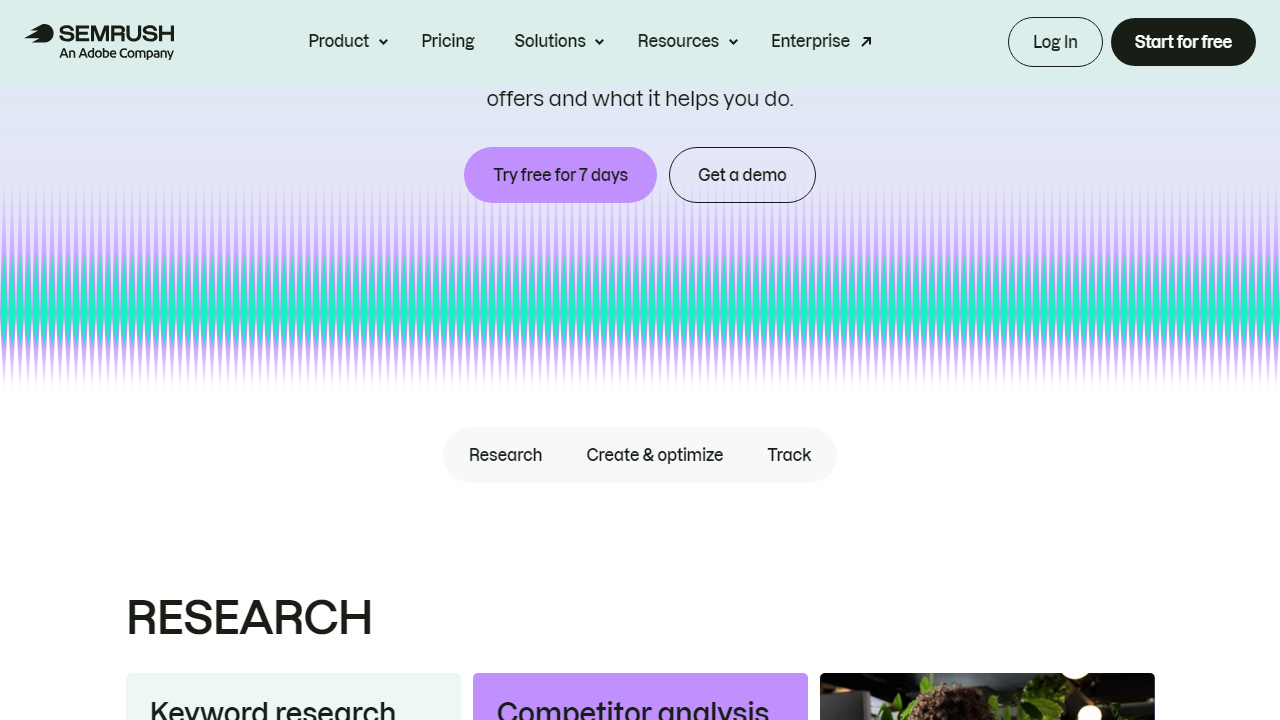
Semrush launched in 2008, founded by Oleg Shchegolev and Dmitri Melnikov in St. Petersburg, Russia. Today it’s headquartered in Boston and publicly traded on the NYSE (SEMR). With over 10 million marketing professionals using the platform globally as of 2026, Semrush has evolved from a keyword research tool into a full-stack digital marketing intelligence suite covering SEO, paid search, content marketing, social media, and competitive research. The company reports tracking over 808 million domains and maintaining one of the largest backlink databases on the internet.
Ubersuggest was created by Neil Patel — one of the most recognizable names in digital marketing — who acquired the original free keyword suggestion tool in 2017 and rebuilt it into a more complete SEO platform. Ubersuggest is deliberately positioned as the accessible, affordable alternative to premium tools. It’s never tried to out-feature Semrush; instead, it targets bloggers, small business owners, and freelancers who need reliable core SEO data without a four-figure annual software bill. Neil Patel Digital continues to develop the tool, and a lifetime license option remains one of Ubersuggest’s most distinctive selling points.
Feature-by-Feature Comparison
This is where the gap between these two tools becomes impossible to ignore. Let’s go through the features that actually move the needle for SEO work.
Keyword Research
Semrush’s Keyword Magic Tool gives you access to over 25.6 billion keywords across 142 geographic databases. You can filter by intent (informational, navigational, transactional, commercial), SERP features, keyword difficulty, and CPC simultaneously. Ubersuggest offers solid keyword suggestions with volume, CPC, and difficulty data, but its database is substantially smaller — estimated at around 6 billion keywords — and the filtering options are far more limited. For broad keyword discovery, both work. For granular intent-based research at scale, Semrush is in a different league.
Competitor Analysis
Semrush’s Traffic Analytics and Organic Research tools let you reverse-engineer any competitor’s traffic sources, top-performing pages, keyword portfolio, and estimated visit counts. The data is remarkably close to Google Analytics figures in our testing — typically within 8–15% accuracy. Ubersuggest’s competitor analysis is basic by comparison: you get top keywords and some traffic estimates, but there’s no deep-dive into competitors’ paid strategies, display advertising, or audience overlap data. If competitive intelligence is a priority, this is a dealbreaker for Ubersuggest.
Site Audit
Both tools offer site audit functionality, but the depth differs dramatically. Semrush’s Site Audit crawls up to 100,000 pages (on Pro), checks for 140+ technical SEO issues, and provides a prioritized fix list with clear explanations. Ubersuggest’s audit crawls up to 1,000 pages on paid plans and flags common issues like broken links, slow load times, and missing meta tags — perfectly adequate for small sites, genuinely insufficient for anything with more than a few hundred pages.
Backlink Analysis
Semrush maintains a database of 43 trillion backlinks updated daily. The Backlink Analytics tool shows referring domains, anchor text distribution, domain authority scores, toxic link identification, and link velocity over time. Ubersuggest’s backlink checker is functional for checking your own site’s profile, but the database depth is a fraction of Semrush’s, and it frequently misses links that both Semrush and Ahrefs both surface. For link-building campaigns or disavow work, rely on Semrush.
Rank Tracking
Semrush tracks rankings daily across desktop and mobile for any location down to city level. The Position Tracking tool supports up to 5,000 keywords on the Guru plan. Ubersuggest tracks rankings as well, but updates are less frequent (every few days in testing), and the location targeting is less granular. For clients who need daily ranking snapshots or local SEO reporting, Semrush is the clear choice.
Content Marketing Tools
This is a category where Semrush has invested heavily. The SEO Writing Assistant grades content in real time for readability, SEO, tone, and originality. The Topic Research tool surfaces trending subtopics and questions. Ubersuggest has a basic AI writer and some content ideas functionality added in recent updates, but it’s clearly not the platform’s core strength. Content teams using Semrush’s workflow integrations with Google Docs and WordPress will find the experience significantly smoother.
Pricing Plans Side-by-Side
Pricing is where Ubersuggest makes its most compelling case. Semrush is genuinely expensive for solo operators, while Ubersuggest offers one of the few legitimate lifetime license deals in the SaaS world. Here’s how they compare in 2026.
Semrush Plans (billed monthly):
| Plan | Price/mo | Best For | Key Limit |
|---|---|---|---|
| Pro | $139.95 | Freelancers, startups | 5 projects, 500 keywords tracked |
| Guru | $249.95 | Growing agencies | 15 projects, 1,500 keywords tracked |
| Business | $499.95 | Large agencies, enterprise | 40 projects, 5,000 keywords tracked |
| Enterprise | Custom | Enterprise teams | Custom limits + API access |
Ubersuggest Plans (billed monthly):
| Plan | Price/mo | Best For | Key Limit |
|---|---|---|---|
| Individual | $29 | Solo bloggers | 1 domain, 150 tracked keywords |
| Business | $49 | Small businesses | 7 domains, 300 tracked keywords |
| Enterprise | $99 | Agencies, consultants | Unlimited domains, 900 keywords |
| Lifetime (Individual) | $290 one-time | Budget-conscious users | Same as Individual monthly |
The lifetime deal from Ubersuggest is genuinely attractive if you only need basic SEO functionality for a single website. Pay once and never again. But compare it to Semrush’s capabilities and it’s clear you’re paying for a fundamentally different product category.
Who Should Use Which Tool?
Best Alternatives to Both Tools
Neither Semrush nor Ubersuggest is the right choice for everyone. Here’s a quick look at how the broader SEO tool landscape stacks up in 2026.
| Tool | Starting Price | Best For | Our Rating |
|---|---|---|---|
| Ahrefs | $129/mo | Link building & content gaps | ⭐ 4.7/5 |
| Moz Pro | $99/mo | Beginners & local SEO | ⭐ 4.0/5 |
| SE Ranking | $65/mo | Mid-market agencies | ⭐ 4.3/5 |
| Mangools | $49/mo | Solo users, easy UX | ⭐ 4.1/5 |
Frequently Asked Questions
Yes. Ubersuggest offers a generous free tier and an affordable lifetime deal, making it ideal for bloggers, solopreneurs, and small businesses just getting started with SEO. It covers keyword research, basic site audits, and competitor analysis without overwhelming new users.
For many tasks, yes. Semrush provides enterprise-grade data including technical audits, backlink analytics, rank tracking, PPC research, and content tools. Agencies and in-house teams use it daily as a primary workflow hub, though human strategy and creativity still remain essential.
Semrush consistently wins on data accuracy and depth. Its keyword database exceeds 25 billion keywords across 140+ countries. Ubersuggest relies partly on Google’s own data, which is solid but shallower — particularly for long-tail and international keyword sets.
Yes. Semrush offers a 7-day free trial on Pro and Guru plans, giving you full access to its feature set before committing. Ubersuggest also has a free plan with daily usage limits, so you can test both tools before spending a cent.
Final Verdict
If budget is your primary concern and you need basic keyword research to get your site off the ground, Ubersuggest delivers real value — especially its one-time lifetime pricing. However, if you are serious about scaling organic traffic, running client campaigns, or competing in any moderately contested niche, the data gap between these two tools becomes impossible to ignore. Semrush simply operates in a different league.
For most marketers reading this in 2026, Semrush is the smarter long-term investment. The broader toolset, superior accuracy, and constant feature updates mean you are unlikely to outgrow it — whereas many Ubersuggest users find themselves upgrading anyway once their traffic goals become more ambitious.
Semrush is our top-rated SEO platform for 2026
Start your free 7-day trial — no credit card required.
Senior SEO Analyst · 9 years testing marketing software · Last updated January 2026