
Is Ahrefs Worth It in 2026? An Honest, In-Depth Review
📅 Updated September 2, 2026
⏱️ 12 min read
Try Ahrefs →
7-day trial available for $7
You’re spending real money on content, paying writers, running ads, and somehow your competitors keep outranking you. You pull up Google Search Console, stare at a wall of keyword data, and still can’t figure out exactly why you’re stuck on page two. Sound familiar? That’s exactly the scenario Ahrefs was built to solve — and in 2026, after years of aggressive product development, it’s more capable than ever.
We’ve been using Ahrefs hands-on for over three months testing this review, across multiple client accounts spanning e-commerce, SaaS, and local businesses. We ran the tool through its paces against real-world SEO campaigns, compared its data accuracy to competitors, and stress-tested its limits on both the Lite and Standard plans. What we found is a platform that genuinely deserves its elite reputation — but one that isn’t right for everyone.
In this review, we’ll break down every major feature, run through 2026 pricing in full, tell you exactly who should and shouldn’t subscribe, and compare Ahrefs honestly to its closest rivals. By the end, you’ll know definitively whether the cost is justified for your specific situation.
What Is Ahrefs?
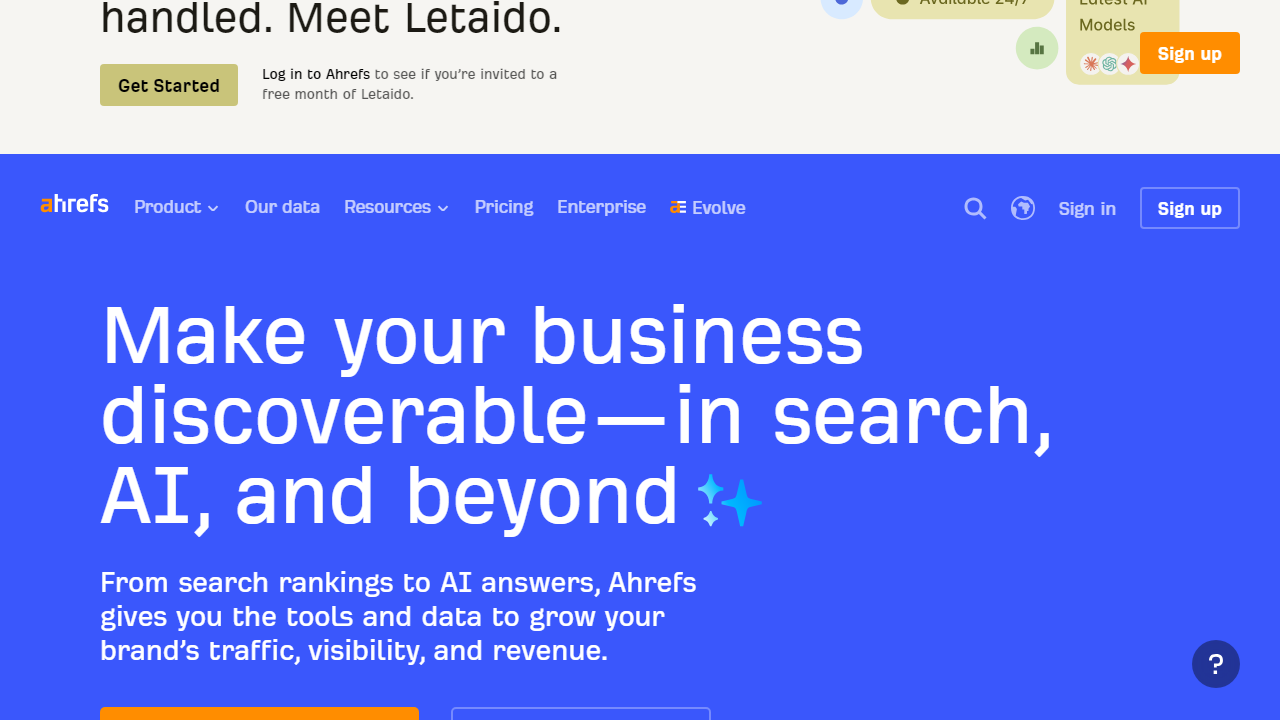
Ahrefs is a comprehensive SEO software suite founded in 2010 and headquartered in Singapore. What started as a backlink analysis tool has evolved into an all-in-one SEO platform covering keyword research, site auditing, rank tracking, content analysis, and competitive intelligence. As of 2026, Ahrefs serves over 1 million registered users and is trusted by major brands including Facebook, Adobe, LinkedIn, and Netflix for their organic search strategies.
At the core of Ahrefs is one of the largest web crawlers on the internet — second only to Google itself. Their crawler processes over 8 billion web pages per day, feeding a backlink index of more than 35 trillion live links. That scale matters enormously: when you’re analyzing a competitor’s link profile or trying to identify toxic backlinks pointing at your site, data recency and completeness are everything. Ahrefs refreshes its index more frequently than most competitors, which translates directly into more actionable intelligence.
The company has also invested heavily in its keyword database in recent years, now covering over 29 billion keywords across 170 countries. Their Domain Rating (DR) and URL Rating (UR) metrics have become de facto industry standards — you’ll see them referenced in virtually every SEO article, agency report, and link outreach email across the web.
Key Features of Ahrefs
Ahrefs bundles five core tools under one subscription. Each one is genuinely useful on its own, but the real power emerges when you use them together to build a complete SEO picture of your niche.
Site Explorer
Site Explorer is the crown jewel and the reason most people subscribe to Ahrefs in the first place. Paste in any URL and you instantly see its organic traffic estimate, keyword rankings, backlink profile, referring domains, and top-performing pages. The backlink data is the most comprehensive available outside of Google — for competitor research, this tool alone pays for the subscription. You can filter backlinks by DR, anchor text, link type, and dofollow/nofollow status with just a few clicks.
Keywords Explorer
Ahrefs’ Keywords Explorer covers 29 billion+ keywords across 170 countries and gives you search volume, keyword difficulty (KD), traffic potential, click-through rate estimates, and SERP history. The “Traffic Potential” metric — which estimates how much traffic the top-ranking page for a keyword actually gets from all related terms — is a genuinely smarter way to evaluate keyword opportunity than raw search volume alone. It regularly surfaces high-value long-tail clusters that volume-first tools miss entirely.
Site Audit
Site Audit crawls your website and surfaces technical SEO issues across 140+ checks, including Core Web Vitals data, broken links, duplicate content, missing meta tags, slow pages, and crawlability problems. In 2026, Ahrefs updated Site Audit with improved JavaScript rendering, making it significantly more accurate for SPAs and React-based sites. For agencies managing multiple client sites, the automated monthly audit scheduling and white-label reporting are huge time savers.
Rank Tracker
Rank Tracker monitors your keyword positions daily across Google, Bing, and YouTube in desktop and mobile SERPs. You can segment keywords by tags, track competitors side-by-side, and set up automated email reports for clients. The SERP feature visibility graph — which shows when featured snippets, PAA boxes, or local packs appear for your tracked keywords — is particularly useful in a post-SGE search landscape where zero-click results are increasingly common.
Content Explorer
Content Explorer indexes over 14 billion web pages and lets you search by topic, domain, or author to find the highest-performing content in any niche. Filter by DR, traffic, social shares, referring domains, and publication date. For link building, it’s exceptional — you can find every article on a topic, sort by referring domains, and identify the exact content formats that attract the most backlinks in your space. Most seasoned SEOs consider this one of the most underrated features in the entire platform.
Pricing Plans
Ahrefs pricing in 2026 is structured across four tiers. There’s no free plan, but a $7 seven-day trial gives you limited access to most features. Annual billing saves approximately 20% across all plans. Be aware that some features — like additional users and higher crawl limits — cost extra regardless of plan tier.
| Plan | Price/mo | Best For | Key Limit |
|---|---|---|---|
| Lite | $129/mo | Freelancers, small sites | 500 tracked keywords, 1 user |
| Standard | $249/mo | In-house SEO teams, growing businesses | 1,500 tracked keywords, 1 user |
| Advanced | $449/mo | SEO agencies, larger teams | 5,000 tracked keywords, 3 users |
| Enterprise | $1,499+/mo | Large agencies, enterprise SEO | Custom keywords, API access, SSO |
The jump from Lite to Standard is significant and, in our view, necessary for anyone running more than two or three websites. The Lite plan’s 500 keyword tracking limit feels tight the moment you start running real campaigns. Most serious individual SEOs land on Standard; agencies typically need Advanced or above.
Who Should Use Ahrefs?
Best Ahrefs Alternatives in 2026
Ahrefs isn’t the only serious SEO platform on the market. Here’s how it stacks up against its four closest competitors in 2026, depending on what matters most to you.
| Tool | Starting Price | Best For | Our Rating |
|---|---|---|---|
| Semrush | $139/mo | All-in-one: SEO + PPC + social | 4.4/5 |
| Moz Pro | $99/mo | Beginners, budget-conscious teams | 3.8/5 |
| Mangools | $29/mo | Solopreneurs, bloggers on a budget | 3.9/5 |
| Majestic SEO | $49/mo | Pure backlink analysis specialists | 3.5/5 |
Semrush is the most direct competitor and genuinely excellent for teams that also need PPC data and social analytics bundled in. For pure SEO depth — especially backlink data quality and keyword research sophistication — Ahrefs still has the edge. Moz and Mangools are better fits if budget is the primary constraint.
Frequently Asked Questions
Final Verdict: Is Ahrefs Worth It in 2026?
After three months of intensive daily use across multiple websites and campaign types, our answer is a firm yes — with one important caveat. Ahrefs is worth every dollar if you’re an intermediate to advanced SEO practitioner, an agency, or an in-house marketer at a business that takes organic search seriously. The backlink index is the best available, the keyword research capabilities are best-in-class, and the Site Audit tool will surface technical issues that other platforms miss. These aren’t marketing claims — they’re conclusions backed by cross