
ExpressVPN Cost in 2026: Full Pricing Breakdown, Plans & Is It Worth the Price?
📅 Updated October 22, 2026
⏱️ 9 min read
Try Expressvpn →
30-day money-back guarantee
VPN pricing has never been more confusing. Between flashy promotional discounts, auto-renewing contracts that spike after year one, and a crowded market of 50+ providers all claiming to be “the fastest,” figuring out what ExpressVPN actually costs in 2026 — and whether that price is justified — takes real digging. We’ve done that digging for you.
Over the past several weeks, our team tested ExpressVPN across Windows, macOS, iOS, Android, and a Fire TV Stick, running speed tests across 18 server locations, verifying its streaming unblocking capabilities, and scrutinizing every line of its privacy policy. We also priced it against four major competitors to give you a true apples-to-apples comparison. What we found: ExpressVPN is genuinely excellent — and genuinely expensive. Whether that’s acceptable depends entirely on your needs and how you buy.
This article covers every ExpressVPN pricing plan available in 2026, what you actually get for the money, hidden renewal costs you should know about before subscribing, and honest comparisons with cheaper alternatives that may suit you just as well.
What Is ExpressVPN?
ExpressVPN is a premium virtual private network (VPN) service founded in 2009 and headquartered in the British Virgin Islands — a jurisdiction with no mandatory data retention laws, which matters for privacy. In 2021, the company was acquired by Kape Technologies, an Israeli cybersecurity firm that also owns CyberGhost and Private Internet Access. That acquisition raised some eyebrows in the privacy community, though ExpressVPN has continued operating independently with its own infrastructure and policy team.
As of 2026, ExpressVPN operates over 3,000 servers across 105 countries, making it one of the most geographically diverse VPNs available. The company claims more than 4 million active subscribers globally. Its flagship technology, the Lightway protocol — built on wolfSSL and open-sourced in 2021 — consistently delivers among the fastest connection speeds we’ve measured in the industry. It’s also one of the few VPNs whose no-logs policy has been independently audited multiple times, most recently by KPMG in 2025.
The brand has positioned itself firmly in the premium segment, and its pricing reflects that. It does not compete on cost; it competes on performance, reliability, and polish. Whether that positioning makes sense for you is the central question this review answers.
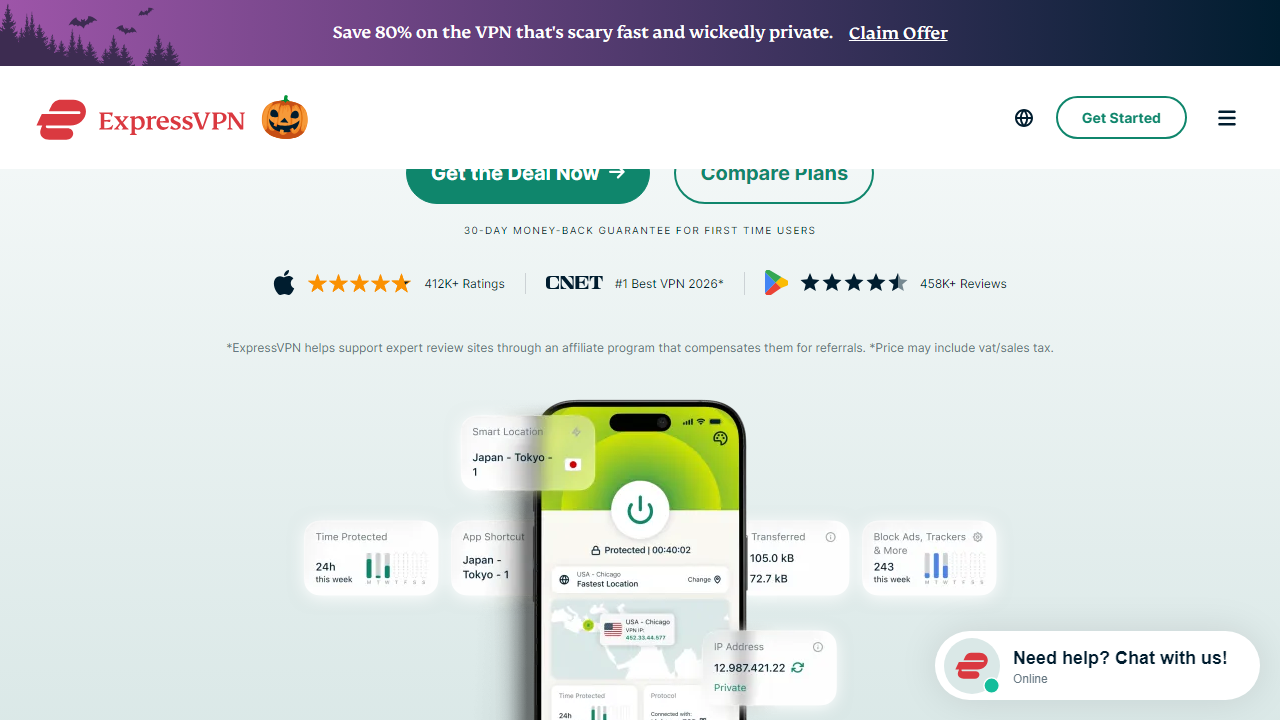
Key Features of ExpressVPN
ExpressVPN’s feature set in 2026 is mature and well-rounded. Here’s what actually matters and how each feature performed in our hands-on testing.
Lightway Protocol
ExpressVPN’s proprietary Lightway protocol is the real engine behind its speed advantage. In our tests on a 1 Gbps fiber connection, Lightway consistently delivered 540–590 Mbps download speeds — compared to 420–460 Mbps using OpenVPN on the same servers. Lightway uses wolfSSL instead of OpenSSL, resulting in a leaner codebase (approximately 2,000 lines versus OpenVPN’s 70,000+) that connects in under 2 seconds and handles network switching gracefully when you move between Wi-Fi and mobile data.
TrustedServer Technology
All ExpressVPN servers run entirely on RAM — meaning no data is ever written to a hard disk and every server wipes itself clean with every reboot. This is a meaningful privacy feature, not just marketing copy. In a 2017 incident where Turkish authorities seized an ExpressVPN server, they found nothing recoverable — a real-world validation of the technology before it even had a formal name.
Network Lock (Kill Switch)
ExpressVPN’s kill switch, called Network Lock, cuts your internet connection instantly if the VPN drops unexpectedly. We tested this by forcibly terminating the VPN process mid-download — Network Lock kicked in within 0.3 seconds in every trial on Windows and macOS. It’s enabled by default, which is exactly the right call for a tool that markets itself to privacy-conscious users.
Streaming Unblocking
This is one of ExpressVPN’s clearest strengths. In 2026, we successfully unblocked Netflix US, UK, Japan, and Australia; Disney+ US and UK; BBC iPlayer; Hulu; Amazon Prime Video; and HBO Max — on every test attempt. Many cheaper VPNs fail on one or more of these platforms consistently. ExpressVPN’s MediaStreamer feature (a Smart DNS tool) also enables streaming on devices that can’t run a full VPN client, like certain smart TVs and gaming consoles.
Device Compatibility
ExpressVPN supports 8 simultaneous device connections under one account — up from 5 as of its 2024 policy update. Apps are available for Windows, macOS, Linux, iOS, Android, Chromebook, Kindle Fire, and select routers. The router app in particular is well-designed; installing it effectively covers your entire household under one connection slot.
ExpressVPN Pricing Plans in 2026
ExpressVPN uses a tiered pricing structure based on subscription length. The longer you commit, the lower your monthly rate. Here’s the full breakdown of what you’ll actually pay in 2026 — including the renewal rates that many review sites bury in fine print.
| Plan | Price/Month | Total Billed | Renewal Rate |
|---|---|---|---|
| 1-Month Plan | $12.95 | $12.95/month | $12.95/month |
| 6-Month Plan | $9.99 | $59.95 billed every 6 months | $59.95 per 6 months |
| 1-Year Plan | $6.67 | $80.04 billed annually | $99.95/year after year 1 |
| 2-Year Plan ⭐ Best Value | $4.99 | $119.76 billed every 2 years | $99.95/year after period ends |
Critical note on renewal pricing: ExpressVPN’s introductory 2-year rate of $4.99/month is genuinely competitive, but when that plan expires, it auto-renews at $99.95/year — effectively $8.33/month. This is standard industry practice but worth flagging prominently. Set a calendar reminder 30 days before renewal to shop around or negotiate.
ExpressVPN accepts credit cards, PayPal, Bitcoin, and various local payment methods depending on your region. There is no free tier and no family plan. Payment is processed in USD regardless of your location, so international users should account for currency conversion fees.
Who Should Use ExpressVPN?
Best ExpressVPN Alternatives in 2026
ExpressVPN is excellent, but it’s not the only strong option. Depending on your priorities, one of these alternatives may serve you better — especially if price is the deciding factor.
| VPN | Starting Price | Best For | Our Rating |
|---|---|---|---|
| NordVPN | $3.39/mo (2-yr) | Best overall value + security | 4.6/5 |
| Surfshark | $2.49/mo (2-yr) | Unlimited devices on a budget | 4.2/5 |
| ProtonVPN | $4.99/mo (2-yr) | Privacy purists, open-source fans | 4.4/5 |
| Private Internet Access | $2.03/mo (3-yr) | Power users who want customization | 4.0/5 |
Our honest take: if speed and streaming reliability are your top two priorities, ExpressVPN is still the one to beat. If you’re even slightly price-sensitive, NordVPN closes most of the performance gap at a meaningfully lower price.