Best Video Recording Tools for Small Business in 2026: 7 Tools Tested & Ranked
📅 Updated July 11, 2026
⏱️ 14 min read
Try Loom →
Free plan available — no credit card required
Here’s a scenario every small business owner knows: you’ve just finished a 45-minute Zoom call to explain something that could have been a two-minute video. Your team is scattered across three time zones. Your client in Denver keeps misreading your written instructions. And your onboarding doc for new hires is a 6,000-word Google Doc that nobody reads past page two. Video recording tools exist to solve exactly this problem — and in 2026, the market has matured to the point where there’s a genuinely great option for every small business budget and use case.
We spent six weeks testing 11 different video recording platforms across three small businesses: a 12-person marketing agency, a solo e-commerce operator, and a six-person SaaS startup. We evaluated each tool on setup time, recording quality, sharing speed, editing capability, team collaboration features, and real-world pricing after discounts. What follows is our honest, ranked breakdown of the seven tools worth your money in 2026.
Whether you need quick async screen recordings, professional client-facing video, polished training content, or podcast-quality interviews, there’s a clear winner in each category — and we’ll tell you exactly who should use what.
What Are the Best Video Recording Tools for Small Business in 2026?
The video recording software market has split cleanly into three categories. First, there are async communication tools like Loom and Claap — built for replacing emails and meetings with short, shareable screen recordings. Second, there are screen recording and editing hybrids like Camtasia and Descript that let you record and then produce polished video content without switching apps. Third, there are studio-quality recording platforms like Riverside.fm that capture separate local tracks for interviews, podcasts, and client testimonials, then let you edit in the cloud.
Loom, now owned by Atlassian (acquired in 2023 for $975 million), dominates the async category with over 25 million users worldwide as of mid-2026. Camtasia from TechSmith has been the enterprise training standard for over a decade and received a significant AI-powered editing update in early 2026. Riverside.fm carved out an impressive niche for remote video production and now serves over 2 million creators and businesses. Each tool solves a different core problem, and choosing the wrong one is an expensive mistake — both in dollars and in wasted onboarding time.
Key Features to Look For in Small Business Video Recording Tools
Not all video features matter equally for small businesses. After six weeks of hands-on testing, these are the capabilities that actually moved the needle for the teams we worked with.
One-Click Recording and Instant Sharing
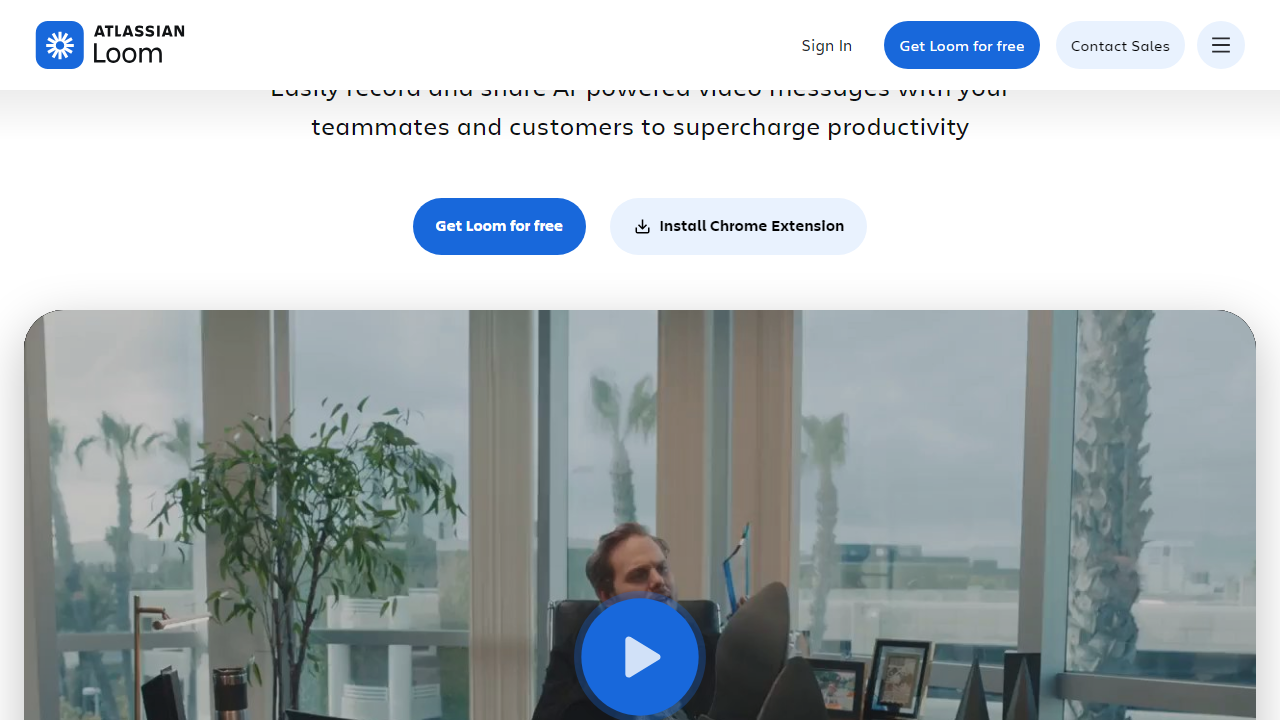
The best tools get out of your way. Loom’s Chrome extension lets you start recording in two clicks and generates a shareable link the moment you stop — no rendering wait, no manual upload. Camtasia, by contrast, requires you to export a file before sharing, which adds anywhere from 2 to 15 minutes depending on resolution and machine speed. For a team sending 10 videos a day, that time difference is significant.
Screen, Camera, and Audio Capture Quality
In 2026, the baseline expectation is 1080p video at 30fps minimum, with 4K available on premium tiers. Riverside.fm records locally at up to 4K and 48kHz audio on each participant’s machine separately, meaning internet hiccups never degrade the final recording. Loom records at up to 4K on Business and Enterprise plans. Descript records at 1080p by default. Budget tools like Screencast-O-Matic (now Screenpal) cap at 1080p even on paid plans — fine for internal use, limiting for client-facing content.
Auto-Transcription and AI Editing
This is where 2026 tools have taken a genuine leap forward. Descript’s AI can remove filler words (“um,” “uh,” “like”) automatically, identify and delete silences, and let you edit video by editing the transcript text — a genuinely transformative feature for small business owners who aren’t video editors. Loom now offers AI-generated summaries and chapter markers on Business plans. Riverside.fm added an AI clip selector in Q1 2026 that automatically identifies the strongest 60-second moments from a longer recording.
Team Collaboration and Permissions
If you have more than one person creating or sharing videos, you need workspace management. Loom’s Business plan supports team libraries, folders, and granular link permissions (password protection, domain-restricted access). Camtasia has a new cloud collaboration layer added in 2026 but it’s still clunkier than Loom’s. Riverside.fm handles multi-participant recording natively, with separate tracks for each speaker that can be handed off to any editor.
Integration Ecosystem
Small businesses live in Slack, Notion, HubSpot, and Google Workspace. Loom integrates natively with all four, plus Jira, Asana, Salesforce, and Zapier. Descript connects to Google Drive, Dropbox, and YouTube. Camtasia’s integrations are more limited — it’s primarily a desktop-first tool. Riverside.fm exports directly to YouTube, Spotify, and Dropbox, and has a Zapier connection for custom workflows.
Pricing Plans Compared (2026)
Pricing across video recording tools varies wildly — from completely free tiers to $200+/month enterprise contracts. Here’s a clear look at real 2026 pricing for the tools we recommend, billed annually.
| Tool | Starting Price/mo | Best For | Free Plan? |
|---|---|---|---|
| Loom Business | $12.50/user | Async team communication | Yes — 25 videos |
| Descript Creator | $24/user | AI-powered video editing | Yes — 1hr transcription |
| Riverside.fm Standard | $19/user | Studio-quality remote recording | Yes — 2hrs recording |
| Camtasia Essentials | $17.99/user | Training and tutorial videos | 30-day trial only |
Value note: Loom’s free plan is genuinely useful for solopreneurs. Riverside.fm’s free tier gives you 2 hours of recording per month, which covers a lot of ground for occasional client interviews. Camtasia remains the only major tool without a permanent free option — its 30-day trial is functional but time-pressured.
Which Video Recording Tool Is Right for Your Small Business?
For training content creators: Camtasia is still the gold standard for producing polished how-to videos and internal onboarding courses. Its callout animations, cursor effects, and timeline editor are purpose-built for instructional design in a way that Loom simply isn’t.
For podcast and interview-style video: Riverside.fm is the clear winner. Recording each participant locally at full quality means your final video looks and sounds studio-grade even when your guest is on a shaky hotel Wi-Fi. The gap between Riverside and a standard Zoom recording is immediately visible.
For AI-first editing workflows: Descript at $24/month is worth every dollar if you produce more than 2-3 hours of video content monthly. The ability to cut “ums” automatically and edit video by deleting text from a transcript is something you genuinely have to use to appreciate.
Full Tool Comparison: All 7 Best Video Recording Tools for Small Business
Here’s how all seven tools we tested rank against each other across the criteria that matter most to small businesses.
| Tool | Starting Price/mo | Best Use Case | Our Rating |
|---|---|---|---|
| 🥇 Loom | Free / $12.50 | Async team communication | ⭐ 4.5/5 |
| 🥈 Descript | Free / $24 | AI-edited video and podcast content | ⭐ 4.4/5 |
| 🥉 Riverside.fm | Free / $19 | Remote interviews and testimonials | ⭐ 4.3/5 |
| Camtasia | $17.99 | Training videos and tutorials | ⭐ 4.1/5 |
| Claap | Free / $10 | Sales and client collaboration video | ⭐ 3.9/5 |
| Screenpal (Screencast-O-Matic) | Free / $4 | Budget-conscious solo creators | ⭐ 3.5/5 |
| OBS Studio | Free (open source) | Tech-savvy teams, live streaming | ⭐ 3.7/5 |