
Best Free AI Writing Tools in 2026: 7 Tested, Ranked & Brutally Honest
📅 Updated July 3, 2026
⏱️ 14 min read
Try Chatgpt →
Free plan available — no credit card required
You’re staring at a blank document at 10 PM, a blog post due by morning, and a budget that doesn’t stretch to a $49/month Jasper subscription. Sound familiar? In 2026, the good news is that you actually have options — real ones, not glorified autocomplete gimmicks. The free tier of the AI writing market has matured dramatically over the past two years, and several tools now deliver genuinely publishable output without charging you a cent.
The bad news? Not all “free” AI writing tools are created equal. Some are stripped-down trial bait. Others are legitimately powerful but throttle you at exactly the wrong moment — mid-article, mid-deadline. After spending three weeks running identical writing tasks through 12 different free-tier AI tools, we’ve distilled the field to the seven that actually deliver. We tested blog posts, product descriptions, email subject lines, social captions, and long-form SEO articles. Every verdict in this piece is based on hands-on use, not spec sheets.
This guide covers the best free AI writing tools available in 2026, what they’re genuinely good at, where they fall short, and which one you should start with based on your specific workflow. Whether you’re a solo blogger, a startup founder writing your own copy, or a student trying to polish an essay, there’s a right tool for you here — and we’ll tell you exactly which one it is.
What Are Free AI Writing Tools?
Free AI writing tools are software applications that use large language models (LLMs) — think GPT-4o, Claude 3.5, or Gemini 1.5 — to help users draft, edit, rewrite, summarize, or improve written content at no upfront cost. Most operate on a freemium model: the core functionality is free, with premium features (higher word limits, advanced tone controls, SEO scoring, plagiarism checks) locked behind a paid subscription.
The category has exploded since 2023. By mid-2026, there are over 200 AI writing tools on the market, according to G2’s SaaS directory — but the free tier quality is concentrated in about a dozen serious contenders. The key distinction to understand is between general-purpose AI assistants (like ChatGPT and Claude) and purpose-built writing tools (like Grammarly, Writesonic, and Copy.ai). General-purpose tools offer more flexibility; purpose-built tools offer more structure and writing-specific features like tone sliders, SEO integrations, and template libraries.
What’s changed most dramatically in 2026 is the capability of free tiers specifically. OpenAI expanded ChatGPT Free’s access to GPT-4o in late 2025, Google made Gemini 1.5 Flash available at no cost, and Grammarly rolled out a significantly upgraded free grammar engine. The floor has risen — which makes choosing the right free tool both easier and harder than it was two years ago.
Top 7 Free AI Writing Tools Reviewed
Here’s our detailed breakdown of each tool, based on three weeks of real-world testing across multiple content types and use cases.
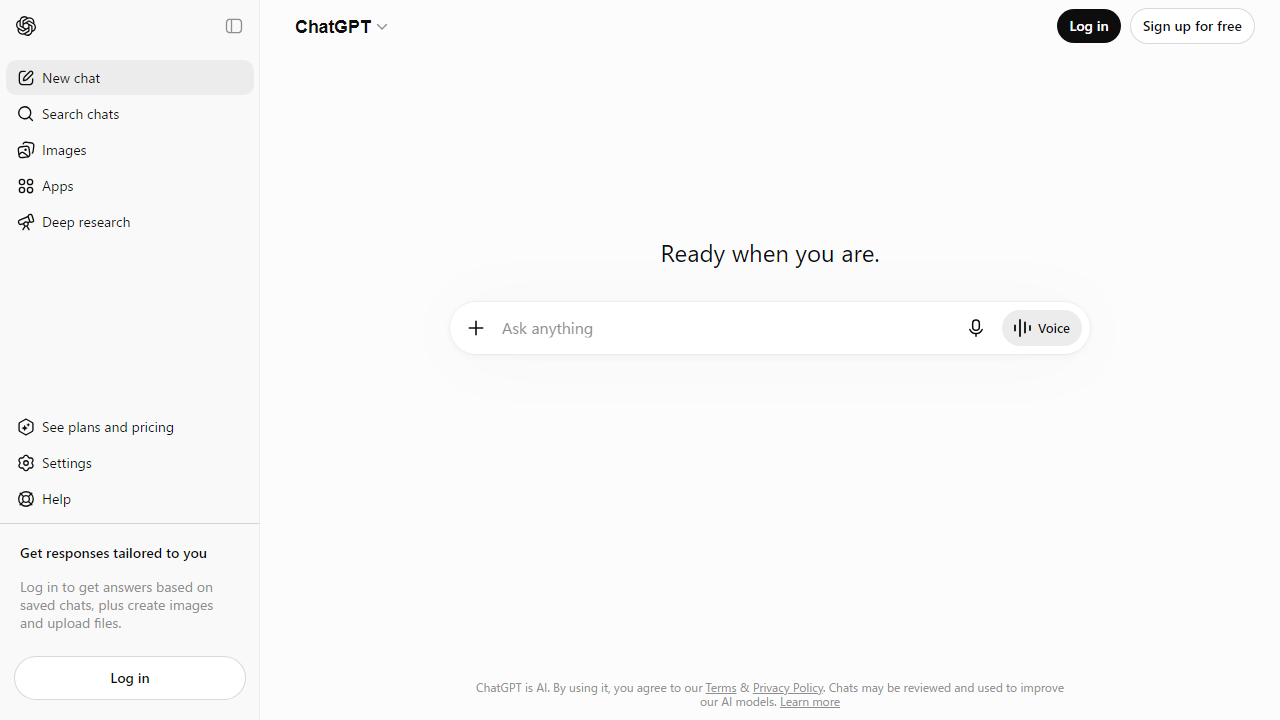
1. ChatGPT Free (OpenAI) — Best Overall
ChatGPT’s free tier now runs on GPT-4o with daily usage limits (approximately 10–15 long-form generations per day before throttling to GPT-4o mini). For most casual and semi-professional writers, that’s enough. The conversational interface makes iterating on drafts fast and intuitive — you can go from a rough outline to a 1,000-word blog post in under 10 minutes. The biggest limitation: no native SEO tools, no plagiarism checker, and custom instructions don’t persist across all sessions on the free plan.
2. Grammarly Free — Best for Editing & Proofreading
Grammarly Free remains the gold standard for grammar and clarity editing in 2026. It catches spelling, punctuation, basic grammar, and sentence structure issues across any browser, Google Doc, or desktop app via its extension. The free tier now includes a limited “rewrite for clarity” AI suggestion — about 100 AI rewrites per month. It does not include tone adjustment, plagiarism detection, or the full generative writing features locked in Grammarly Pro ($12/month). For pure editing, it’s hard to beat.
3. Google Gemini Free — Best for Research-Integrated Writing
Gemini 1.5 Flash powers the free tier of Google Gemini, and its deep integration with Google Search makes it uniquely strong for research-heavy writing tasks. Ask it to draft an article on a current topic and it can pull live data, cite sources inline, and produce drafts that feel grounded rather than hallucinated. Output quality on creative and persuasive writing is slightly below ChatGPT, but for factual content — news summaries, product comparisons, technical explainers — Gemini Free is genuinely excellent and has no meaningful daily limit for standard text generation.
4. Claude Free (Anthropic) — Best for Long-Form & Nuanced Writing
Claude 3.5 Haiku powers the free tier, with occasional access to Claude 3.5 Sonnet during off-peak hours. Anthropic has positioned Claude as the “thoughtful writer’s AI,” and it shows — the prose style is more nuanced and less formulaic than ChatGPT’s default output. Claude Free allows up to 200,000 token context windows even on the free plan, meaning you can paste an entire manuscript and ask it to edit for consistency. Daily message limits (around 30–40 messages) are the main friction point for heavy users.
5. Writesonic Free — Best Purpose-Built Template Tool
Writesonic’s free plan gives you 10,000 words per month on their standard model (Sonic 3) and access to 100+ writing templates including blog intros, product descriptions, Google Ads copy, and LinkedIn posts. The Chatsonic feature provides a ChatGPT-style interface with real-time web search. Free users get no access to the Surfer SEO integration or Brand Voice features, but for structured short-form copy, Writesonic Free punches above its weight. It’s particularly strong for e-commerce writers needing product description templates.
6. Copy.ai Free — Best for Marketing Copy Snippets
Copy.ai’s free plan is more restricted than it used to be — 2,000 words per month as of 2026 — making it essentially a sampler rather than a working tool for most users. What it does well within those limits: punchy ad headlines, email subject lines, and value proposition statements. The template library is excellent and the UI is among the cleanest in the category. If your needs are purely short-form marketing snippets and you write fewer than 2,000 words of copy a month, it works. Anyone writing more than that will hit the wall quickly.
7. Notion AI Free — Best for Writers Already in Notion
Notion AI is baked directly into Notion’s free workspace, with 20 free AI responses included for all users (no monthly reset — it’s a one-time allotment before you’re prompted to upgrade to Notion AI for $10/month add-on). That’s genuinely limited, but for Notion power users, the integration is seamless: highlight any text block, hit the space bar, and you can summarize, expand, rewrite, or translate inline. If your writing workflow already lives in Notion, those 20 responses are best saved for your most important editing tasks.
Free vs. Paid: Pricing Comparison
Here’s a clear look at what each tool’s free tier actually gives you — and what the paid upgrade costs if you need more. All prices reflect July 2026 billing rates.
| Tool | Free Limit | Paid Plan | Upgrade Worth It? |
|---|---|---|---|
| ChatGPT Free | ~15 GPT-4o msgs/day | $20/mo (Plus) | Yes, for daily users |
| Grammarly Free | 100 AI rewrites/mo | $12/mo (Pro) | Yes, for pro writers |
| Gemini Free | Unlimited Flash usage | $19.99/mo (Advanced) | Only if you need 1.5 Pro |
| Claude Free | ~30–40 msgs/day | $20/mo (Pro) | Yes, for heavy writers |
| Writesonic Free | 10,000 words/mo | $16/mo (Individual) | Yes, for SEO bloggers |
| Copy.ai Free | 2,000 words/mo | $36/mo (Pro) | Only if you use workflows |
Who Should Use Free AI Writing Tools?
Head-to-Head Comparison: Best Free AI Writing Tools
To make your decision easier, here’s how the top free AI writing tools stack up across the metrics that matter most for real-world writing work.
| Tool | Best Use Case | Free Word Limit | Our Rating |
|---|---|---|---|
| ChatGPT Free | All-purpose drafting | ~15 msgs/day | ⭐ 4.6/5 |
| Grammarly Free | Grammar & editing | 100 AI rewrites/mo | ⭐ 4.5/5 |
| Google Gemini Free | Research writing | Effectively unlimited | ⭐ 4.3/5 |
| Claude Free | Long-form nuanced prose | ~30–40 msgs/day | ⭐ 4.4/5 |
| Writesonic Free | Templates & structured copy | 10,000 words/mo | ⭐ 4.1/5 |
| Copy.ai Free | Marketing micro-copy | 2,000 words/mo | ⭐ 3.6/5 |