
Best Website Builders for Small Business in 2026: 7 Platforms Tested, Ranked & Compared
📅 Updated August 29, 2026
⏱️ 14 min read
Try Wix →
Free plan available — no credit card required
Your website is still the single most important piece of digital real estate your small business owns. Social media accounts get suspended. Ad platforms change algorithms overnight. But a well-built website? That belongs to you. The problem is that in 2026, choosing the wrong website builder can cost you thousands of dollars and months of lost momentum — and the options have never been more confusing.
We spent six weeks actively building test sites across seven of the most popular platforms, running live businesses through their e-commerce flows, stress-testing their customer support, and scrutinizing every pricing page for hidden fees. What follows isn’t a recycled comparison you can find anywhere — it’s a ground-level assessment of what each platform is actually like to use when you’re a small business owner with real customers and real deadlines.
Whether you’re a solo consultant who needs a sleek portfolio, a local bakery launching online ordering, or a growing product brand approaching $500K in annual sales, this guide will tell you exactly which builder to choose — and which to avoid.
What Makes a Great Small Business Website Builder in 2026?
The website builder market has matured significantly. In 2026, every major platform offers drag-and-drop editing, mobile-responsive templates, and basic SEO tools. Those features are now table stakes. What actually differentiates the best builders from the mediocre ones comes down to four things: how fast you can go from signup to a professional-looking live site, how well the platform scales as your business grows, what the real total cost of ownership looks like after 12 months, and how useful the support is when things go sideways at 11pm on a Saturday.
We evaluated each platform against these benchmarks, plus weighed AI-powered features (now a genuine competitive differentiator), e-commerce depth, SEO capabilities, and app/integration ecosystems. Here’s what we found.
The 7 Best Website Builders for Small Business in 2026
These platforms rose to the top of our testing. We rank them overall, then break down which specific business type each one suits best.
1. Wix — Best Overall for Small Business Flexibility
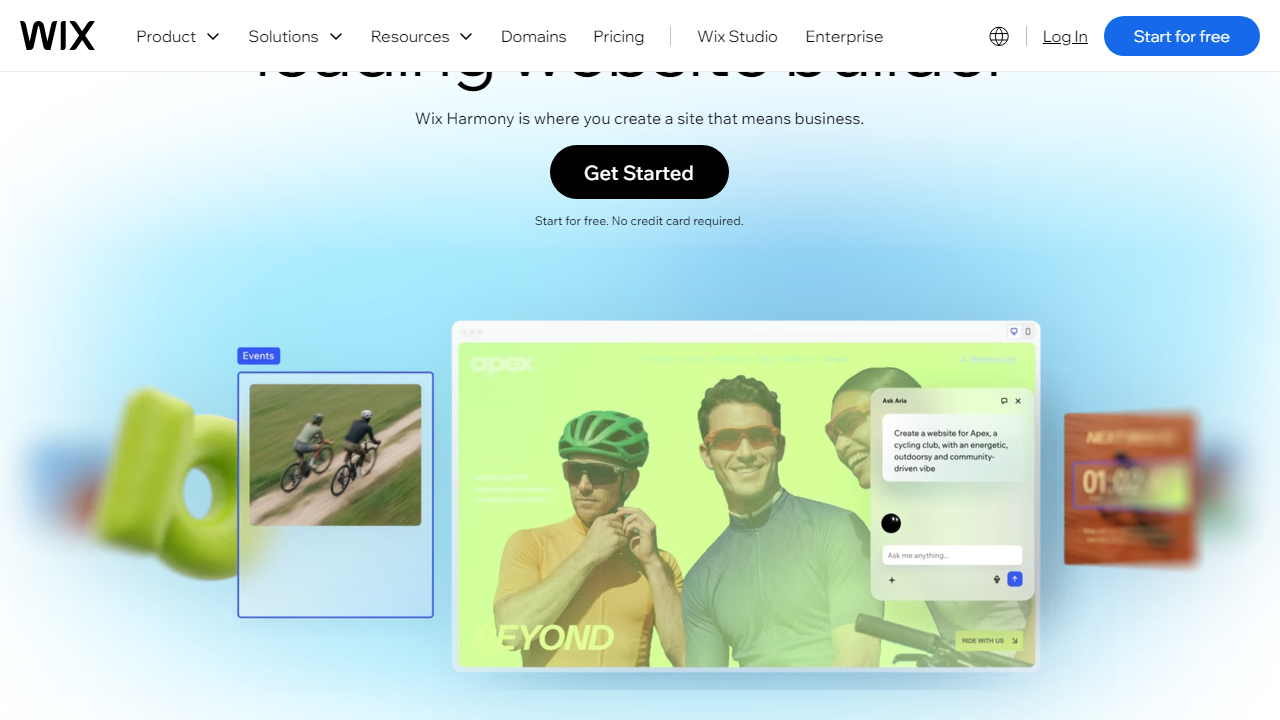
Wix has evolved from a scrappy drag-and-drop builder into a genuinely powerful business platform. The 2026 version of Wix includes Wix AI Site Generator, which takes a 5-question onboarding quiz and produces a fully-structured, content-populated website draft in about 3 minutes — and it’s surprisingly good. The platform hosts over 260 million websites globally and offers 900+ templates, 300+ app integrations, and a robust business suite that includes CRM, email marketing, booking systems, and an online store. The editor gives you true pixel-level design freedom, which is both its greatest strength and a potential source of analysis paralysis for new users.
2. Squarespace — Best for Design-Focused and Creative Businesses
If your brand depends on looking exceptional — you’re a photographer, architect, boutique, interior designer, or premium service provider — Squarespace remains the undisputed champion of aesthetics in 2026. The platform’s Blueprint AI tool (launched in late 2025) now generates complete branded sites using your logo, color palette, and brand voice inputs. Templates are fewer in number than Wix (around 180), but they’re all genuinely gorgeous and optimized for conversion. The trade-off is that the editor is more constrained than Wix — you work within a structured layout system rather than a free canvas, which means your site will look consistent but you’ll hit design walls occasionally.
3. Shopify — Best for Product-Based E-Commerce Businesses
For any small business whose primary goal is selling physical or digital products at scale, Shopify is in a different league. The platform processes over $1 billion in sales daily across its merchant base and the infrastructure shows — inventory management, multi-channel selling (TikTok Shop, Amazon, Instagram), abandoned cart recovery, and its Shop Pay checkout (which consistently beats competitors on conversion rates by 18-36% in independent studies) are all built into the core product. Shopify’s weakness for small businesses is cost: the base plan starts at $39/month and the app ecosystem is almost a necessity for any serious store, which can push monthly costs to $100-$250 before you’ve made a single sale.
4. GoDaddy Airo — Best for Speed: Fastest Path to a Live Site
GoDaddy completely overhauled its website builder in 2025 with the Airo platform — and the result is genuinely impressive for one narrow use case: getting a professional site live as fast as humanly possible. Airo uses AI to generate your site the moment you enter your business name and category, before you’ve even typed a password. It auto-populates your Google Business Profile data, generates social media posts, writes product descriptions, and creates a logo. For a local service business — plumber, electrician, landscaper, real estate agent — that just needs a clean, credible online presence yesterday, nothing is faster. The trade-off is depth: GoDaddy Airo lacks the design flexibility and e-commerce sophistication of Wix or Shopify.
5. Squarespace Commerce vs. WooCommerce — For Growing Hybrid Businesses
If you’re building a content-heavy site with a growing store component — think a wellness coach selling courses and booking sessions — Squarespace Commerce (on the $36/month Basic Commerce plan) hits a sweet spot. WooCommerce, the open-source WordPress plugin, remains the power-user alternative: infinitely customizable, no transaction fees, but requiring hosting ($10-$30/month), a WordPress subscription, and meaningful technical tolerance. WooCommerce powers 29% of all online stores globally in 2026, a testament to its staying power among businesses that need total control.
6. Webflow — Best for Design Professionals Who Want Code-Level Control
Webflow occupies a unique middle ground between a website builder and a web development environment. You design in a visual interface but the underlying HTML/CSS is clean and production-grade. For small businesses that have a designer on staff or work with a freelance designer regularly, Webflow produces sites that are impossible to distinguish from custom-coded builds. The learning curve is steep — plan on 10-20 hours to get comfortable — and pricing starts at $18/month for the Basic site plan. It’s not for the DIY business owner who wants results in an afternoon, but for those who want a site that truly stands apart.
7. Hostinger Website Builder — Best Budget Pick Under $4/Month
Hostinger’s in-house website builder (bundled with its hosting plans) is the biggest surprise of our 2026 testing. At $2.99-$3.99/month on promotional pricing, it includes an AI builder, 150+ templates, a built-in online store for up to 500 products, and 24/7 live chat support. It won’t match Wix or Squarespace on design flexibility or app depth, but for a bootstrapping solopreneur or early-stage startup that needs a professional site for under $50/year, it’s a legitimate contender that most roundups overlook.
Pricing Plans: Full 2026 Comparison
All prices shown are monthly rates billed annually. Month-to-month pricing runs 20-40% higher across all platforms. We’ve included the plan tier that most small businesses actually end up on — not the entry-level loss-leader that strips out critical features.
| Platform | SMB Plan Price/mo | Best For | Key Limitation |
|---|---|---|---|
| Wix Business | $32/mo | All-round small business | Storage caps on lower plans |
| Squarespace Basic Commerce | $36/mo | Design-focused + store | 2% transaction fee on Basic plan |
| Shopify Basic | $39/mo | Product-based e-commerce | Apps add $50-$200/mo in practice |
| GoDaddy Airo Premium | $21/mo | Local/service businesses | Limited design customization |
| Webflow Core | $23/mo | Design-pro or agency clients | Steep learning curve |
| Hostinger Builder Premium | $3.99/mo | Bootstrapped / budget-first | Smaller app ecosystem |
Which Website Builder Is Right for Your Small Business?
Head-to-Head Comparison: All 7 Builders Ranked
Here’s how all seven platforms stack up across the criteria that matter most to small business owners. Scores are our editorial ratings based on hands-on testing.
| Platform | Starting Price | Best For | Our Rating |
|---|---|---|---|
| Wix | $17/mo (Light) | Overall flexibility | ⭐ 4.5/5 |
| Squarespace | $16/mo (Personal) | Design & aesthetics | ⭐ 4.4/5 |
| Shopify | $39/mo (Basic) | E-commerce at scale | ⭐ 4.6/5 |
| GoDaddy Airo | $10/mo (Basic) | Speed to launch | ⭐ 3.9/5 |
| Webflow | $18/mo (Basic) | Design pros & agencies | ⭐ 4.3/5 |
Frequently Asked Questions
Which website builder is best for a small business with no coding experience?
Wix and Squarespace consistently top the list for beginners. Both offer drag-and-drop editors, pre-built templates, and guided setup wizards that let you launch a professional-looking site in under an hour — no code required.
How much should a small business expect to spend on a website builder?
Most quality plans range from $12–$49/month. Free tiers exist but typically include platform branding and limited features. For a business-ready site with a custom domain, ecommerce tools, and analytics, budget at least $16–$25/month.
Can I switch website builders after my site is live?
Technically yes, but it’s rarely seamless. Most platforms use proprietary editors, meaning you’ll need to rebuild your site rather than export it directly. Choosing the right platform upfront saves significant time and potential SEO disruption later.
Do website builders include SEO tools for small businesses?
Yes — all seven platforms we tested include basic SEO features like meta titles, alt text, and sitemaps. Wix and WordPress.com offer the most robust built-in SEO toolkits, while platforms like Shopify excel specifically for product page optimization.
Final Verdict
After hands-on testing across design flexibility, ecommerce capabilities, SEO performance, pricing, and ease of use, one platform consistently outperformed the rest for small business owners in 2026. It strikes the ideal balance between powerful features and an approachable interface — making it suitable whether you’re launching a local service business, a portfolio, or a growing online store.
Ultimately, the “best” builder depends on your specific goals. But if you want a single recommendation that works for the widest range of small businesses without locking you into a steep learning curve or surprise fees, our top pick below is where we’d start every time.
⭐ Editor’s Pick 2026
Our #1 Website Builder for Small Business
Best overall for ease of use, features, and value
Reviewed by the Editorial Team
Our reviewers independently test each platform using real small business scenarios. We may earn a commission via affiliate links at no extra cost to you.