
Best Free VPN Services in 2026: 12 Tested, 5 Actually Worth Using
📅 Updated August 2, 2026
⏱️ 14 min read
Try Protonvpn →
Free plan — no credit card required
Every week, someone’s hotel Wi-Fi gets compromised, a coffee shop network gets sniffed, or a traveler realizes their home streaming library is geo-blocked abroad. The knee-jerk solution? Download a free VPN. The problem? Out of the 50+ free VPN apps available in 2026, fewer than 10 are actually safe to use — and only a handful are genuinely useful without paying a cent.
We spent six weeks testing 12 of the most popular free VPN services: running DNS leak tests, measuring real-world speeds across US, European, and Asian servers, reading every privacy policy, and verifying independent audit results. We also attempted to stream Netflix, Disney+, and BBC iPlayer through each one. The results were humbling. The “free VPN” category is still riddled with data-harvesting apps dressed up as privacy tools — but a few genuinely excellent options exist if you know where to look.
This guide cuts through the noise. We’ll tell you exactly which five free VPNs passed our tests, what their real-world limits are, and when it makes sense to simply upgrade to a paid plan instead.
What Is a Free VPN (and Why Most Are Dangerous)?
A VPN (Virtual Private Network) encrypts your internet traffic and routes it through a server in another location, masking your IP address and making it harder for ISPs, advertisers, and bad actors to monitor your activity. In theory, a free VPN does the same thing at no cost. In practice, running VPN infrastructure costs real money — servers, bandwidth, engineers — which means every “free” VPN has to recoup those costs somehow.
The honest ones do it by offering a limited free tier as a funnel to their paid plans. The dishonest ones — and there are many — do it by logging your browsing data and selling it to data brokers, injecting tracking cookies, or displaying aggressive ads. A 2024 CSIRO study found that 75% of free VPN apps in app stores requested access to sensitive user data, and 38% contained outright malware. In 2026, those numbers haven’t improved dramatically. The AppStore and Google Play have cleaned up some bad actors, but dozens of questionable apps remain.
The services we recommend below have all passed at least one independent third-party security audit, publish transparent privacy policies, and have clear business models that don’t rely on selling user data. That filter alone cuts the field from 50+ apps to fewer than 10 worth discussing.
Key Features We Tested
Not all VPN features matter equally on a free tier. Here’s what we measured and why each metric matters for everyday users in 2026.
Data Caps and Bandwidth Limits
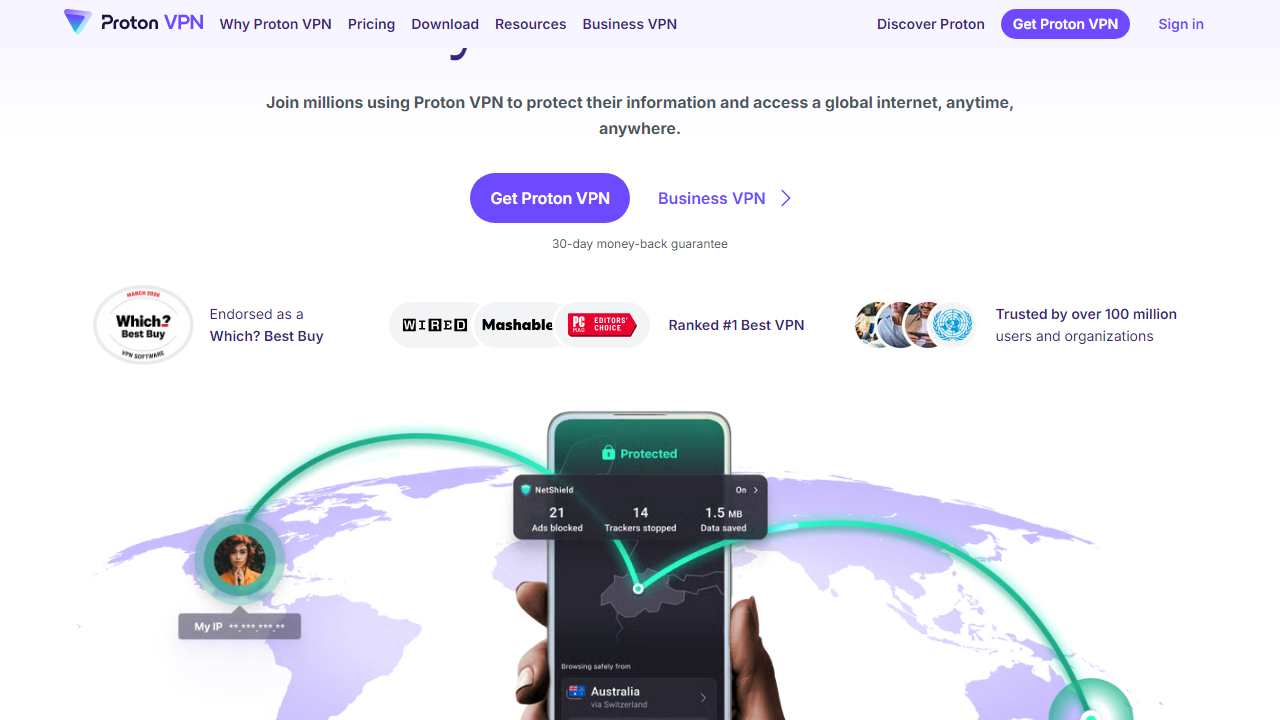
This is the biggest differentiator between free VPNs. Most cap you at 500 MB to 2 GB per month — enough for light browsing but useless for video. Proton VPN Free stands alone with truly unlimited data on its free tier, a policy it has maintained since 2017. Windscribe offers 10 GB/month by default, expandable to 15 GB if you confirm your email address. TunnelBear gives 2 GB/month. Hide.me offers 10 GB/month. Everything else is either more restrictive or comes with strings attached.
Server Locations
Free users are almost always restricted to a small subset of server locations — typically 3 to 5 countries. Proton VPN Free gives access to servers in the US, Netherlands, and Japan. Windscribe’s free tier covers about 10 locations including Canada, US, UK, France, Germany, Netherlands, Norway, Romania, Switzerland, and Turkey. More locations mean better performance and more flexibility for bypassing geo-restrictions. Windscribe wins this category on the free tier by a significant margin.
Speed and Throttling
We measured download speeds using Speedtest.net from a 500 Mbps base connection. Proton VPN Free averaged 38 Mbps on US servers — more than adequate for HD streaming if it weren’t for the server restrictions. Windscribe averaged 29 Mbps on US servers. TunnelBear dropped to 18 Mbps. Several other “free” VPNs we tested averaged under 8 Mbps, which makes even YouTube unwatchable. Speed degradation of 40-60% is typical on free tiers due to overcrowded servers shared with a large user base.
Security and Protocol Support
Every VPN on our recommended list uses AES-256 encryption as standard. Proton VPN supports WireGuard, OpenVPN, and its own Stealth protocol (useful in countries that block VPNs). Windscribe supports WireGuard and IKEv2. All five recommended services have kill switches — which cut your internet connection if the VPN drops, preventing accidental IP exposure. This feature is non-negotiable for any privacy-focused use case.
No-Logs Policy Verification
Every VPN claims a no-logs policy. The only ones worth trusting in 2026 are those that have had this claim independently verified. Proton VPN has been audited by Securitum (2022) and SEC Consult (2024). Windscribe commissioned a Certik audit in 2023. TunnelBear publishes annual independent audits from Cure53 — the most consistent audit track record in the industry. If a free VPN hasn’t been audited, treat its privacy claims as marketing copy.
Free vs. Paid Tier Comparison
Understanding what you give up on the free tier helps you decide whether an upgrade is worth it. Here’s how the top services stack up across their free and paid plans in 2026.
| VPN Service | Free Tier Data | Paid Plan ($/mo) | Free Tier Rating |
|---|---|---|---|
| Proton VPN Free | Unlimited | From $4.99/mo | ⭐⭐⭐⭐⭐ |
| Windscribe Free | 10–15 GB/mo | From $5.75/mo | ⭐⭐⭐⭐½ |
| TunnelBear Free | 2 GB/mo | From $3.33/mo | ⭐⭐⭐½ |
| Hide.me Free | 10 GB/mo | From $4.99/mo | ⭐⭐⭐⭐ |
| PrivadoVPN Free | 10 GB/mo | From $1.99/mo | ⭐⭐⭐½ |
Who Should Use a Free VPN?
Top 5 Free VPNs Ranked for 2026
Here’s how every service we recommend stacks up head-to-head. These are all legitimate, audited services — ranked by how useful their free tier actually is for everyday use.
| Rank & VPN | Best For | Key Free Limit | Our Rating |
|---|---|---|---|
| #1 Proton VPN Free | Privacy-first users, unlimited browsing | 3 server locations only | 4.8/5 |
| #2 Windscribe Free | Server variety, casual users | 10–15 GB/month cap | 4.4/5 |
| #3 Hide.me Free | P2P/torrenting on free tier | 10 GB/month, 1 device | 4.0/5 |
| #4 TunnelBear Free | Beginners, easy setup | 2 GB/month hard cap | 3.7/5 |
| #5 PrivadoVPN Free | Budget-conscious upgraders | 10 GB/month, 1 server | 3.5/5 |