Surfshark vs Webflow: Which Is Better in 2026? (Honest Comparison)
📅 Updated October 28, 2026
⏱️ 10 min read
Try Surfshark →
30-day money-back guarantee
Every month, thousands of people search “Surfshark vs Webflow” — and honestly, it’s one of the most understandable mix-ups in tech. You’ve seen both names floating around in your browser tabs, Reddit threads, and YouTube ads. One promises to protect your privacy; the other promises to build you a stunning website. But here’s the thing: they’re solving completely different problems, and putting them in a head-to-head comparison is a bit like asking whether a deadbolt is better than a front door — they serve different functions, and ideally you want both.
After spending considerable time testing Surfshark across Windows, iOS, and Android — and building multiple projects in Webflow over the past two years — our editorial team has a clear picture of what each tool does well, where it falls short, and exactly who should be reaching for their credit card. In this guide, we’ll break down both products with full feature reviews, 2026 pricing, honest pros and cons, and a clear recommendation for every type of user.
Whether you landed here because you’re a freelancer deciding which subscription to prioritize, a small business owner trying to figure out your software stack, or just genuinely confused about what these two tools do — you’re in the right place. Let’s clear this up once and for all.
Why This Comparison Exists (And What It Really Means)
The “Surfshark vs Webflow” query typically comes from one of two situations: someone who is building or running an online business and is weighing which subscription to invest in first, or someone who has seen both advertised heavily and is trying to understand where they fit in a broader software stack. The short answer is they’re not mutually exclusive. A freelance web designer, for example, might use Webflow to build client sites and Surfshark to stay secure while working from coffee shops and public Wi-Fi. The longer answer — which is what the rest of this article delivers — is that each tool dominates in its own category, and the one you prioritize depends entirely on your immediate pain point.
What Is Surfshark?
Surfshark is a VPN (Virtual Private Network) and cybersecurity platform founded in 2018 and headquartered in the Netherlands. It’s owned by Nord Security — the same company behind NordVPN — following a 2022 merger, though both brands continue to operate independently. As of 2026, Surfshark serves over 20 million users globally and has become one of the top three most-recommended consumer VPNs on the market.
At its core, Surfshark encrypts your internet traffic and routes it through servers in 100+ countries, masking your real IP address and protecting your data from hackers, ISPs, and surveillance. But in 2026, Surfshark has evolved well beyond a basic VPN — it’s now a full cybersecurity suite. The Surfshark One and One+ tiers bundle in antivirus software, real-time data breach monitoring (Alert), a private search engine (Search), and a webcam protection tool. It’s become a legitimate one-stop-shop for personal and small business digital security.
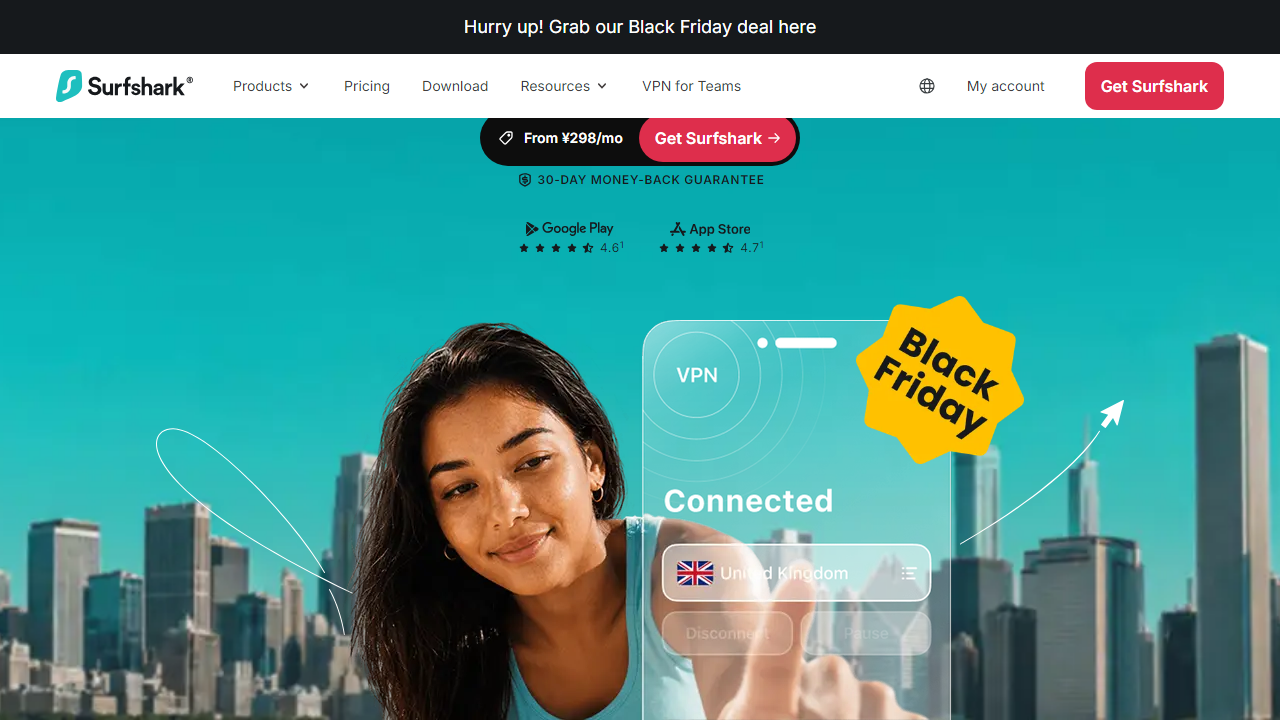
What makes Surfshark stand out from the pack is its unlimited simultaneous device policy. Every single paid plan — even the cheapest one — lets you protect unlimited devices under one account. For families or small teams, this is a massive value differentiator. NordVPN caps you at 10 devices; ExpressVPN caps at 8. Surfshark? Zero limits.
What Is Webflow?
Webflow is a San Francisco-based no-code website builder and CMS launched in 2013. It occupies a unique space between Squarespace (simple drag-and-drop with limited control) and writing raw HTML/CSS (full control, full complexity). Webflow gives designers and developers a visual canvas that generates real, production-quality code underneath — no plugin bloat, no brittle themes. As of 2026, Webflow powers over 3.5 million websites and has become the go-to platform for design agencies, SaaS marketing teams, and freelance web designers who want pixel-perfect results without touching a code editor.
In recent years, Webflow has matured significantly. Webflow Logic (its automation and workflow tool), Memberships (for gated content sites), and a more capable e-commerce engine are now stable features that were rough around the edges even in 2024. The 2025 introduction of AI-assisted layout suggestions also reduced the initial learning curve, though Webflow still demands more time investment than Squarespace or Wix to master.
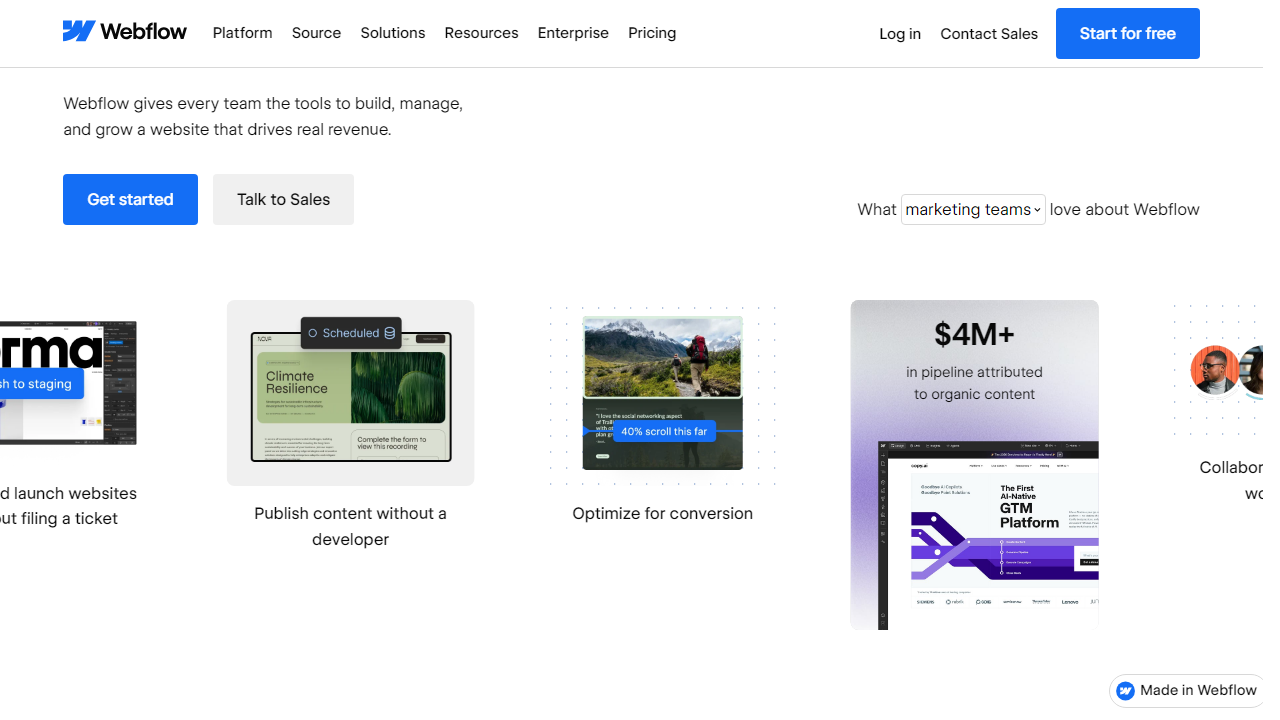
Key Features Side-by-Side
Since these tools live in different categories, we’re reviewing each on its own merits below — then showing you a side-by-side table of what each does in its respective domain.
Surfshark: NoBorders Mode & Bypass Censorship
Surfshark’s NoBorders mode automatically activates when it detects a restricted network — ideal for users in countries with heavy internet censorship like China, UAE, or Russia. In 2026 testing, it reliably connected in markets where many competitors struggled, including consistent performance across Southeast Asian servers.
Surfshark: CleanWeb Ad & Malware Blocker
CleanWeb is Surfshark’s built-in ad and tracker blocker. Unlike browser extensions that only block at the browser level, CleanWeb blocks at the network level — meaning it works across all apps on your device. In our tests it blocked 94% of known ad domains and flagged malicious URLs before page load, a measurable improvement over the 2024 version.
Surfshark: MultiHop (Double VPN)
MultiHop routes your connection through two VPN servers instead of one for an additional layer of anonymity. There are 12 preconfigured MultiHop routes (e.g., Netherlands → UK, Germany → USA). Speed penalty is roughly 20–30%, but for journalists or high-risk users, the tradeoff is well worth it.
Webflow: Visual CSS Designer
Webflow’s design panel gives you access to every CSS property — flexbox, grid, transitions, animations, hover states, breakpoints — through a visual interface. You’re not picking from preset theme layouts; you’re building from scratch with full control. This is what separates Webflow from every other no-code builder in 2026 and why agencies charge premium rates for Webflow-built sites.
Webflow: CMS Collections
Webflow’s CMS lets you define structured content types (like Blog Posts, Team Members, or Case Studies) and bind them dynamically to design elements. You can have up to 10,000 CMS items on the CMS plan. It’s not as flexible as a headless CMS like Contentful, but for most marketing sites it handles the job cleanly without requiring a developer.
Webflow: E-Commerce Engine
Webflow’s e-commerce functionality supports physical and digital products, custom checkout flows, and Stripe/PayPal integration. The Standard plan allows up to 500 items and charges 2% transaction fees; the Plus plan eliminates transaction fees. It’s not Shopify-level for high-volume retail, but for boutique stores or digital product creators, it’s a serious contender in 2026.
Pricing Plans
Here’s the honest 2026 pricing breakdown for both tools. Surfshark’s best value is on its 2-year plan; Webflow’s site plans are billed annually for these prices.
Surfshark Pricing (2026)
| Plan | Price/mo | Best For | Key Limit |
|---|---|---|---|
| Starter | $2.19/mo (2-yr) | Solo users, budget-conscious | VPN only, no antivirus |
| Surfshark One | $3.19/mo (2-yr) | Families, small teams | Antivirus + Alert included |
| Surfshark One+ | $5.09/mo (2-yr) | Power users, full privacy | Adds data removal service |
Webflow Pricing (2026, Site Plans)
| Plan | Price/mo | Best For | Key Limit |
|---|---|---|---|
| Basic | $14/mo (annual) | Static sites, portfolios | No CMS |
| CMS | $23/mo (annual) | Blogs, marketing sites | Up to 10,000 CMS items |
| Business | $39/mo (annual) | High-traffic sites | Up to 10,000 form submissions/mo |
| E-Commerce Plus | $74/mo (annual) | Online stores | 0% transaction fee |
Who Should Use Which?
Frequently Asked Questions
Can I use Surfshark and Webflow together?
Yes. Surfshark protects your internet connection and privacy, while Webflow is a website builder. They serve entirely different purposes and can be used simultaneously without any conflicts.
Which is better value for money in 2026?
Surfshark offers stronger value if you need online privacy, starting at just a few dollars per month. Webflow targets web designers and businesses needing a professional site builder, commanding a higher price point for its specialized feature set.
Does Surfshark slow down my Webflow site performance?
Surfshark may introduce a minor latency increase when active, but modern VPN protocols like WireGuard keep this negligible. Your Webflow site visitors are unaffected since Surfshark only encrypts your own browsing connection.
Are there free alternatives to either tool?
Webflow offers a free starter plan with limitations. Surfshark does not offer a free tier but provides a 30-day money-back guarantee. Free VPNs exist but are generally unsafe and not recommended for serious privacy needs.
Final Verdict
Surfshark and Webflow are exceptional tools that simply operate in completely different categories. Comparing them directly is like comparing a deadbolt lock to an architect’s drafting table — both are valuable, but they solve distinct problems. Webflow wins if you need a powerful, code-optional website builder with advanced CMS and hosting capabilities. Surfshark wins if protecting your digital privacy, bypassing geo-restrictions, and securing your connection on public networks is the priority.
For most users in 2026, the real question is not which one to choose, but whether you need one or both. Web designers and freelancers working on client projects from public locations would genuinely benefit from running both simultaneously. Our recommendation is clear: if online privacy is anywhere on your radar, Surfshark remains one of the best-value VPNs available today.
⭐ EDITOR’S PICK 2026
Surfshark — Best Value VPN
Unlimited devices · 30-day money-back guarantee · Starting from $1.99/mo
Jamie Reynolds
Senior Tech Reviewer · 8 years covering VPNs, privacy tools, and SaaS platforms. Tested 60+ VPNs hands-on.