
Copy.ai vs Semrush: Which Is Better for Content Marketing in 2026?
📅 Updated October 23, 2026
⏱️ 12 min read
Try SEMrush →
Free 7-day trial available
Here’s a question we get at least twice a week in our inbox: “Should I be using Copy.ai or Semrush for my content marketing?” The honest answer is that this comparison is a little like asking whether you should buy a food processor or a chef’s knife — they’re both kitchen tools, but they solve very different problems. That said, if your budget only allows for one platform and you’re trying to grow organic traffic, the answer matters enormously.
We spent two weeks running both platforms side-by-side across real client projects — a B2B SaaS brand and a regional e-commerce retailer — testing everything from keyword research and competitor analysis to long-form blog drafts and ad copy generation. What we found was nuanced: Copy.ai has matured significantly since its early days, while Semrush has pushed aggressively into AI-assisted content creation. The overlap is real, but so are the gaps.
This article breaks down exactly where each tool wins, where it falls short, and which one deserves your monthly subscription fee in 2026. We’ll cover features, pricing, use cases, and the scenarios where you might actually need both.
What Are Copy.ai and Semrush?
Copy.ai launched in 2020 as one of the first consumer-grade AI writing tools, built on GPT technology. By 2026, it has evolved well beyond simple short-form copy generation. The platform now offers GTM (Go-to-Market) AI workflows, long-form blog post generation, brand voice customization, and team collaboration features. It’s used by over 17 million users worldwide, ranging from solo entrepreneurs to enterprise marketing teams at companies like Salesforce and HubSpot. Its core value proposition remains speed — helping writers produce content at scale without sacrificing brand consistency.
Semrush, founded in 2008 and publicly traded since 2021, is an entirely different beast. It’s a comprehensive digital marketing intelligence platform covering SEO, PPC, content marketing, competitive research, social media, and now AI-assisted writing. With a database of over 25 billion keywords and 43 trillion backlinks, it’s the go-to research layer for most serious SEO professionals. As of 2026, Semrush has integrated its ContentShake AI tool more deeply into its platform, making it a legitimate player in the AI writing space — though content creation remains secondary to its research capabilities.
The core tension: Copy.ai is a content creation tool that lacks strategic SEO depth. Semrush is an SEO strategy platform that now creates content. Understanding that distinction saves you from making an expensive mistake.
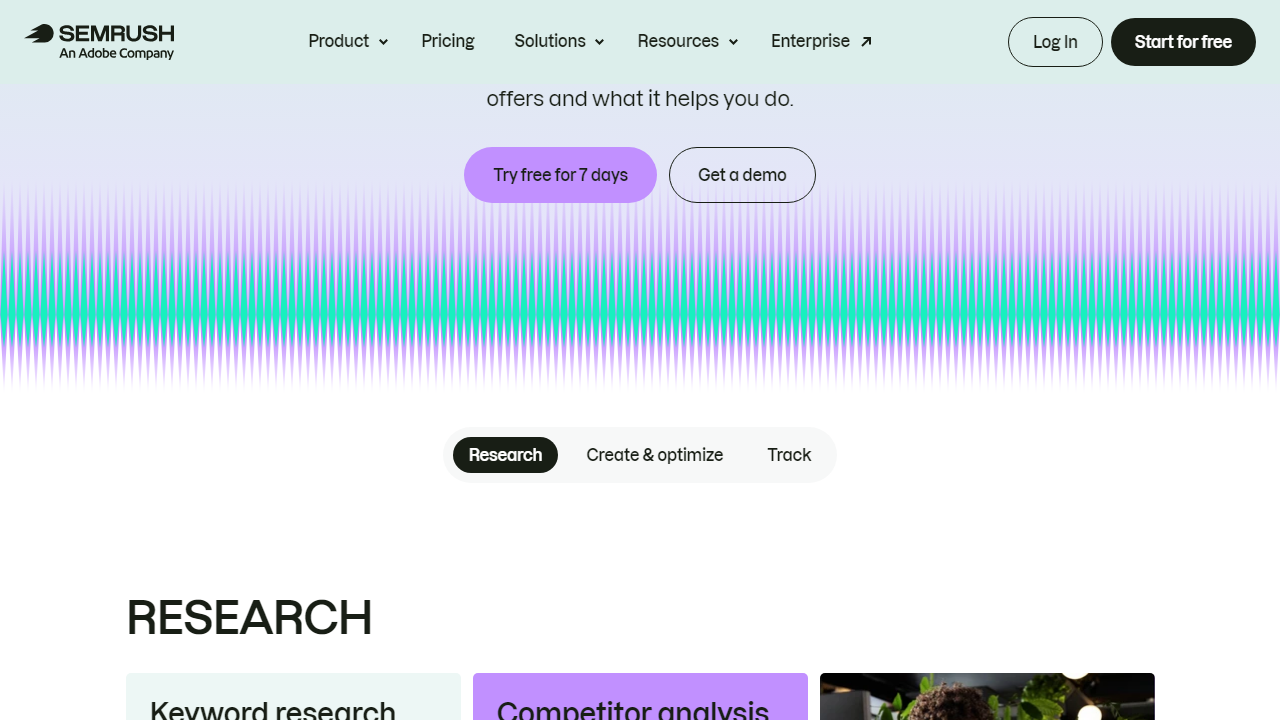
Feature-by-Feature Comparison
Let’s get into the specifics. We evaluated both tools across the capabilities that matter most to content marketers in 2026.
AI Content Generation
Copy.ai is the clear winner here. Its long-form blog wizard produces structured, brand-consistent drafts in under three minutes, with support for custom tone-of-voice profiles. In our testing, it generated a 1,500-word B2B SaaS article that required roughly 25% editing — competitive with any tool on the market. Semrush’s ContentShake AI also produces decent drafts, but they skew more generic and require heavier editing. The advantage Semrush has is that its content suggestions are pre-loaded with real keyword data from its SEO database, giving you built-in optimization context that Copy.ai lacks natively.
Keyword Research & SEO Intelligence
Semrush wins by a mile. Its Keyword Magic Tool surfaces over 25 billion keyword variations with difficulty scores, search intent labels, CPC data, and SERP feature previews. Copy.ai has no native keyword research functionality whatsoever — you’d need to import data from an external tool. For any team serious about ranking content, this gap is a dealbreaker in Copy.ai’s column.
Competitor Analysis
Semrush’s Traffic Analytics and Organic Research tools let you dissect any competitor’s top-performing pages, traffic sources, keyword gaps, and backlink profile. We identified three high-opportunity blog topics for our e-commerce client in under 20 minutes using Semrush’s content gap tool — a workflow that simply doesn’t exist in Copy.ai. Copy.ai has no competitive intelligence capabilities.
Workflow Automation & GTM Workflows
This is where Copy.ai fights back. Its GTM AI Workflows allow marketing teams to build automated content pipelines — pulling from CRM data, running through AI generation steps, and outputting customized assets at scale. For sales enablement content, email sequences, and product descriptions at volume, Copy.ai’s workflow engine is genuinely impressive and more flexible than anything Semrush offers on the automation side.
Technical SEO & Site Auditing
Semrush’s Site Audit tool crawls up to 100,000 pages per month on the Pro plan, flagging 130+ technical issues with prioritized fix recommendations. Copy.ai has zero technical SEO functionality. If you’re managing a website’s health, Semrush is non-negotiable.
Collaboration & Team Features
Both tools offer team seats, but Copy.ai’s collaborative workflow builder is more intuitive for content teams. Semrush’s collaboration features are solid for SEO teams but less optimized for writers working in parallel on drafts. Copy.ai edges ahead here for pure content operations.
Pricing Plans Side-by-Side
Pricing is where the comparison gets interesting. Copy.ai is significantly more affordable for small teams, while Semrush’s cost reflects its much broader feature set. Here’s how both stack up in 2026:
| Plan | Price/mo | Best For | Key Limit |
|---|---|---|---|
| Copy.ai Free | $0 | Casual users, testing | 2,000 words/mo, 1 seat |
| Copy.ai Pro | $49/mo | Freelancers, small teams | Unlimited words, 5 seats |
| Copy.ai Team | $249/mo | Growing marketing teams | Unlimited words, 20 seats, workflows |
| Semrush Pro | $139.95/mo | Freelancers, in-house SEOs | 5 projects, 500 tracked keywords |
| Semrush Guru | $249.95/mo | Agencies, content teams | 15 projects, historical data, ContentShake AI |
| Semrush Business | $499.95/mo | Large agencies, enterprises | 40 projects, API access, white-label |
The value equation here is important to parse. Copy.ai’s Pro plan at $49/month is genuinely affordable for what it delivers. Semrush at $139.95/month looks expensive until you realize it replaces four or five separate tools — keyword tracking, backlink analysis, site auditing, competitor research, and content optimization. For an SEO-focused team, Semrush is often the cheaper consolidation play.
Who Should Use Which Tool?
Best Alternatives to Consider
Neither tool a perfect fit? Here are four alternatives worth evaluating depending on your specific needs and budget in 2026.
| Tool | Starting Price | Best For | Our Rating |
|---|---|---|---|
| Jasper AI | $49/mo | Enterprise content teams, brand-consistent writing at scale | 4.4/5 |
| Ahrefs | $129/mo | Backlink-focused SEOs who prefer cleaner UX than Semrush | 4.5/5 |
| Surfer SEO | $89/mo | Writers who want SEO-optimized content without a full SEO suite | 4.2/5 |
| Writesonic | $16/mo | Budget-conscious creators needing AI writing with basic SEO features | 3.8/5 |